
May 19, 2025, by Ben Atkinson
Reimagining Higher Education in the Age of Artificial Intelligence: Insights from the Echo Engage Conference 2025
The 2025 Echo Engage Conference brought together thought leaders, educators, and technologists to critically examine the future of education amid rapid advances in artificial intelligence (AI) and digital transformation. Central to the discourse was a fundamental question: What is the purpose of education in a world increasingly shaped by machines?
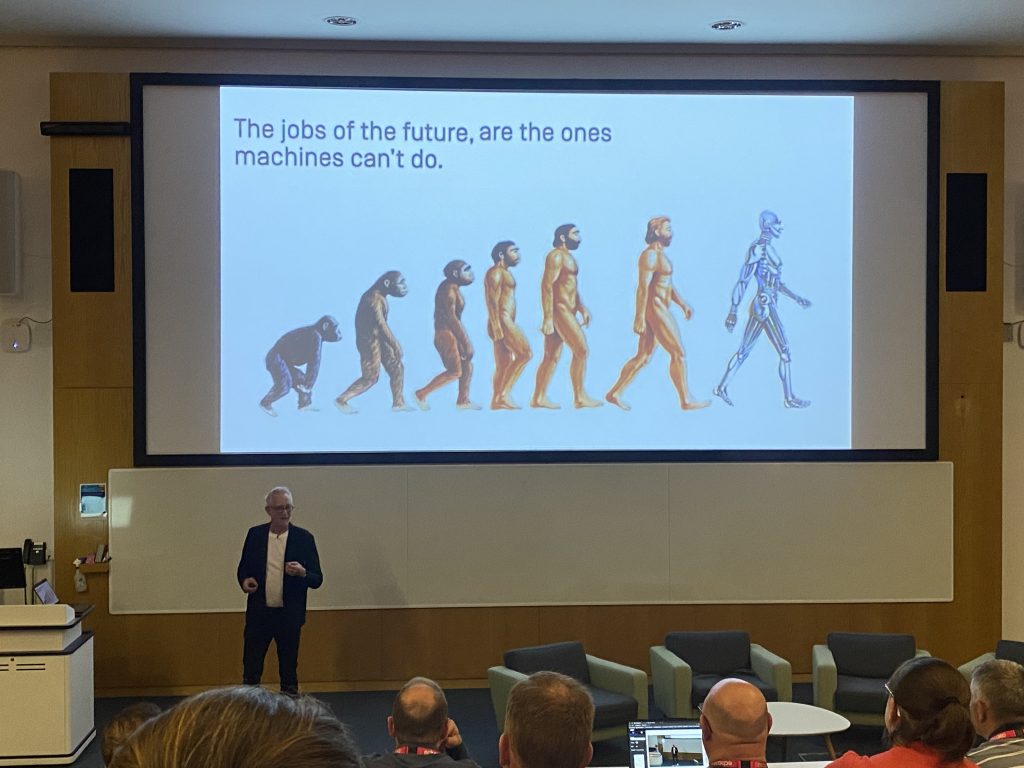
In his keynote address, Graham Brown-Martin evoked Noam Chomsky’s Enlightenment-era notion that the highest goal of life is the pursuit of understanding and creativity. From this perspective, education should cultivate the capacity for independent learning and critical inquiry. Yet Brown-Martin also warned of a competing trend—one that seeks to standardise knowledge and behaviour through indoctrinatory mechanisms embedded within educational systems. These systems, he argued, often prioritise compliance over curiosity, shaping learners to conform to inherited frameworks rather than question them.
This critique was echoed through interviews that Brown-Martin presented. First, Keri Facer, who challenged the assumption that universities, in their current form, will—or should—remain the dominant destination for learners in the decades ahead. Instead, she urged educators to reconsider what children and young people truly need in a rapidly evolving world. Then, Seth Godin, who further problematized the legacy of education as a system built for the industrial age, designed to produce obedient workers rather than imaginative leaders. Collectively, these provocations underscored the urgent need to move beyond the “conveyor belt” model of education.
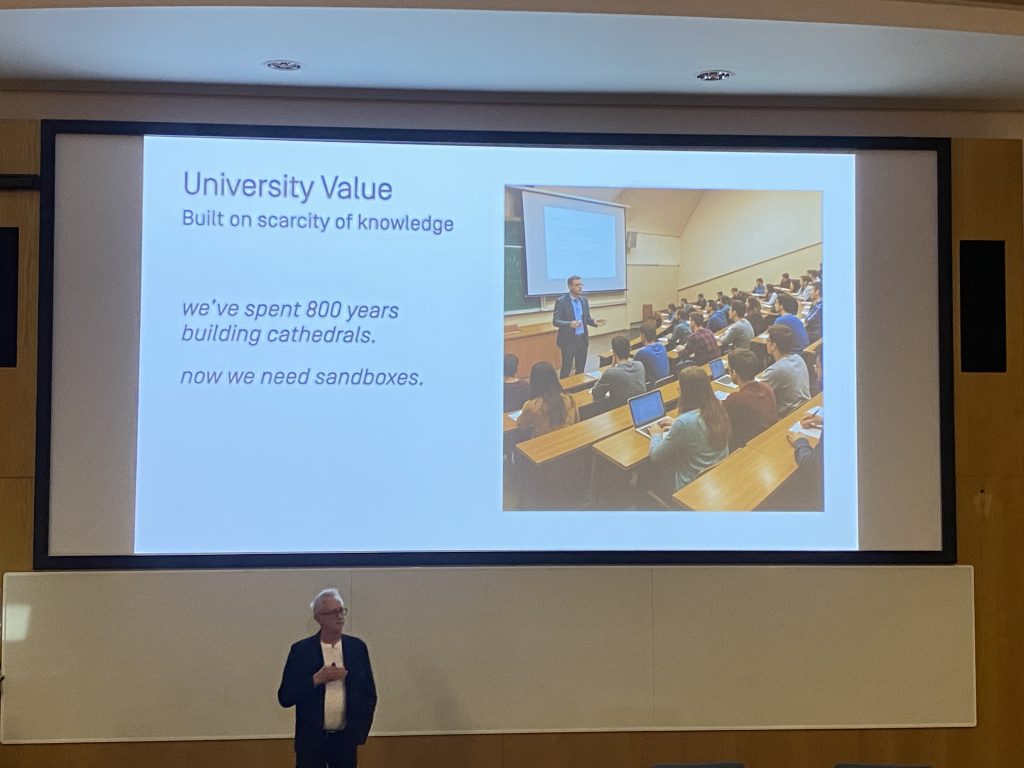
Historical voices such as John Dewey and Seymour Papert were also shared in the keynote, in order to highlight alternative educational paradigms. Papert’s constructionist philosophy, which emphasizes learning through making, doing, and discovery, proposes a radical departure from traditional models. He famously suggested abolishing standardized curricula, age segregation, and uniform instruction—elements he viewed as antithetical to authentic learning. The conference keynote drew a compelling metaphor: modern universities as “cathedrals” built over centuries to institutionalize knowledge, in contrast to the more open, playful “sandboxes” of earlier knowledge cultures. As Brown-Martin asked, what happens when these cathedral walls crumble? Might knowledge become freer, more democratic, and more learner-driven?
AI, of course, plays a pivotal role in this evolving landscape. Richard Nelson’s session on “Smart Learning” addressed the dual promise and peril of AI integration in higher education. Tools like Graide and FeedbackFruits are already reshaping assessment and feedback mechanisms, with AI capable of learning from human grading patterns and enhancing objectivity. Immersive learning platforms, including metaverse environments, are opening new possibilities for arts-based and interactive education. However, Nelson emphasized the importance of maintaining human agency and ethical scrutiny in deploying these technologies. The University of Bradford’s “traffic light” system—indicating appropriate, cautious, and restricted uses of AI—offers a useful framework for cultivating AI literacy among students and staff alike.
Learning analytics also featured prominently in the discussions. Echo AI, for example, enables institutions to track student engagement with recorded lectures and other digital content. Yet this raises complex questions around privacy, equity, and interpretation. As Helen Williams of the University of Nottingham noted, video viewership cannot be simplistically equated with academic performance. Mandating video consumption may yield superficial compliance rather than genuine engagement—“Thou shalt watch” met with “Then I shalt press play.” Moreover, data patterns must be contextualized within students’ broader socio-economic realities, including caregiving responsibilities, work commitments, and accessibility challenges.
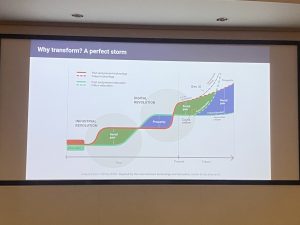
At a systemic level, the conference emphasized that educational transformation must be both structural and philosophical. The current pace of technological advancement far outstrips the capacity of traditional education systems to adapt. The COVID-19 pandemic exposed this misalignment, but AI is now accelerating it. The World Economic Forum estimates that nearly half of all workers will require reskilling, yet universities, particularly in the UK, face ongoing funding crises and misalignments with commercial EdTech products. There is a pressing need to build a “coalition of the willing” to reimagine education—not through incremental adjustments, but through bold, collective reinvention.
Projects such as the development of a critical thinking AI tool in partnership with Sage show promise, offering interactive guidance through complex problem solving and helping to foster more strategic thinking. Meanwhile, initiatives to release large lecture video datasets for public and research use reflect a growing recognition of open knowledge as a tool for the public good.
In conclusion, the Echo Engage Conference underscored that the future of education will not be determined by technology alone, but by the ethical, pedagogical, and institutional choices educators and policymakers make today. As AI continues to transform the nature of work, learning, and human interaction, the higher education sector must respond not merely with new tools, but with renewed values—centred on autonomy, creativity, equity, and critical engagement.
No comments yet, fill out a comment to be the first

Leave a Reply