
The microbiome goes viral
May 12, 2017
In this post, I want to return to a topic that started to fascinate me in 2007, namely the microbiome. In 2009 I published an article (with Iina Hellsten) about the metaphors used to make the microbiome public, but then didn’t do any further research on the topic, apart from writing a blog post stimulated by Jon …

Our microbiome: Separating hype from health
May 5, 2017
This is a blog post by Nicholas Staropoli, originally posted at the Epigenetics Literacy Project on April 18, 2017. It’s reposted here with permission. The post deals with the issue of hype, which we have discussed a lot on this blog; in this post the focus is on the microbiome. *** The details of science — how to …
Cassini: Space probes, history and women
April 29, 2017
I have just read a lovely article by Rebekah Higgitt on the various Cassinis that worked in France as astronomers. One of them was Giovanni Domenico (or Jean Dominique) Cassini (8 June 1625 – 14 September 1712), the first director of the observatory founded by Louis XIV, and discoverer, amongst other things, of four satellites of the planet …
Public trust in science: Myths and realities
April 28, 2017
The March for Science has come and gone. There was no fuss; but there was wit and fun; and solidarity and conviviality. The march did what it set out to do: it got people talking about science and politics. During the march, some tweets jumped out at me. They focused on the thorny issue of …
Biosocial: A brief conceptual history
April 21, 2017
I have recently come across the word ‘biosocial’ in various social science debates about epigenetics and other advances in the life- and bio-sciences. A chapter in a book on ‘social epigenetics’ (and the ‘biosocial’) says for example: “Epigenetics has considerable potential to transform social science by embedding mutually regulative reciprocal connections between biological and social …
Time and science communication
April 7, 2017
On 29 March, 2017 the UK House of Commons Science and Technology Committee published the results of its inquiry into science communication. On 31 March Tim Caulfied tweeted about an article that Andy Miah had written about the report for The Conversation. Tim said: “How scientists should communicate their work in a post-truth era … …
Epigenetics, hype and woo
March 31, 2017
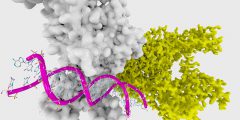
A couple of weeks ago I noticed a new twitter account: @EpigeneticsBs (short for ‘epigenetics bullshit’). Its mission is to make epigenetic ‘bullshit’ public, or as it says: “There’s a lot of #epigenetics pseudoscience & quackery out there. We RT some of it for your edification and entertainment.” These (re)tweets are produced by people working …

An iconography of truth
March 19, 2017
With all the talk about post-truth and post-facts swirling around me, I thought I had to write something about all this, about how utterly important it is to stand up for facts, truth, evidence, expertise, sincerity, honesty, dignity, integrity, fairness, justice…., however hard that might be in the political, economic, social, cultural, intellectual and academic …

Making science public: The science march
March 10, 2017
The other day over coffee I was reading a blog post and an article. They made me think. The blog post on …and Then There’s Physics rattled once again the rotten foundations of the ivory tower stereotype of academia, while the article by Ed Yong in The Atlantic was about the March for Science that’ll …
3D printing with atoms: Laboratory life
March 6, 2017
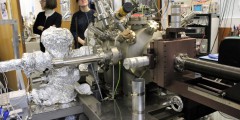
There is a long tradition of social scientists observing and analysing laboratory life. The most seminal book that has emerged from this tradition is probably Bruno Latour and Steve Woolgar’s 1979 Laboratory Life: The social construction of scientific facts (they changed the subtitle in 1986 to ‘the construction of scientific facts, as they became aware …
 MSP bookmarks
- Twitter May 8, 2017
- Social innovations in Europe #RRI November 3, 2015
- Harvey Graff, the undisciplinarian September 20, 2015
- Replacing Pesticides With Genetics August 31, 2015
- Addressing hazardous chemicals in the circular economy August 25, 2015
Find, follow, join us


