
Gene drive communication: On bombs and bullets
January 20, 2023
In a recent article for Scientific American, the zoologist and author of a recent book on the history of genetic engineering, Matthew Cobb, lays out the pros and cons of ‘gene drive’. Gene drive is a new genetic technology that could be used to wipe out whole species of insects that transmit, for example, malaria. …
Making Science Public 2022: End of year round-up of blog posts
December 9, 2022
This is now the 10th time that I have written an overview of the blog posts I have published over the preceding year. Phew! How time flies. Strangely, this year has been quite productive. I have posted more stuff about Covid, of course, but also about monkey pox, as well as about climate change, gene …

What’s in a name? On embryology, developmental biology and discipline naming
October 24, 2022
Last week Philip Ball asked an interesting question on Twitter which provoked a lot of responses and comments: “when did ‘embryology’ start to become ‘developmental biology’? I bet Philip will post an excellent answer to that question soon. I am not Philip and I am not a historian of biology; I am just a magpie. …

Andrea Wulf’s ‘Magnificent Rebels’ (2022)
September 23, 2022
The situation in this country and around the world is quite depressing and I wondered what could cheer me up. Then I started to read Andrea Wulf’s Magnificent Rebels: The First Romantics and the Invention of the Self and that did the trick (I had previously read her biography of Alexander von Humboldt and enjoyed that too). …
Marianne North: On the trail of a Victorian painter and adventurer
July 15, 2022
A while ago, my husband listened, rather by chance, to Thought for the Day, where Rev Marie-Elsa Bragg mentioned a book called ‘A Vision of Eden’ by Marianne North (as an aside, North was an atheist). My husband later told me about the book, as he knew I was ’into such things’. He also knew …
Gnomes, ichthyosaurs and 19th-century science communication
January 14, 2022
Last weekend I had an interaction on Twitter that got me away from doomscrolling and transported me back to my safe place, namely the 19th century. In my past life, when I was very young, I wrote a Staatsexamensarbeit, a sort of MA for people on the teacher training track (I never went to the …

Francis Willughby and me
November 26, 2021
You have probably all heard of Newton or Halley or Hooke or Pepys … But have you heard of Willughby? I had, vaguely, but I did not look hard enough. They were all early members of the Royal Society (founded in 1660) and involved in a little scandal to which I’ll come later. But first …

Science, philosophy and metaphor (a post by Andrew Reynolds)
November 5, 2021
Soon a book will appear that will be of interest to life scientists and metaphor scientists alike. It is by Andrew Reynolds and entitled Understanding Metaphors in the Life Sciences (please click through for more information!). It is one of the many interesting books in Cambridge University’s Understanding Life series, including, for example, Understanding Genes, …

Grace de Laguna: A forgotten pioneer in the history of the language sciences
August 30, 2019
Recently I was asked to write something about Grace de Laguna. Grace de what… I wondered… until I googled myself and found that I had written a few pages about her work in my 1996 book on the history of pragmatics. That was a blast from the past! But this also made me think. I …
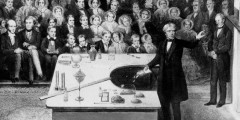
Triangulating the history of science communication: Faraday, Marcet and Smart
October 22, 2018
This post first appeared on the History and Philosophy of Language Sciences blog. I am reposting it on the Making Science Public blog with permission, where it can rub shoulders with other posts relating to science communication. ••• The 19th century was a time of monumental change in science, industry and also communication. In this …
 MSP bookmarks
- Twitter May 8, 2017
- Social innovations in Europe #RRI November 3, 2015
- Harvey Graff, the undisciplinarian September 20, 2015
- Replacing Pesticides With Genetics August 31, 2015
- Addressing hazardous chemicals in the circular economy August 25, 2015
Find, follow, join us


