
Making thoughts public: One year on
December 31, 2012
This is the end of the year and a time for reflection. I have now been blogging for just under a year and, looking back, this has been quite a learning curve, about blogging, myself, and the various topics I have blogged about. At first I had been rather reluctant to take up blogging and …
Royal Institution Christmas Lectures: Some family memories
December 24, 2012
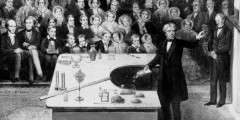
It will soon be time for our family to sit down and watch the Royal Institution Christmas Lectures. This is a ritual that is almost as important as Christmas itself. When I came to Oxford in 1985 from Germany, having studied French and philosophy. I had never heard of the Christmas lectures and ‘science’ was …
Abseiling down the climate cliff metaphor
December 17, 2012
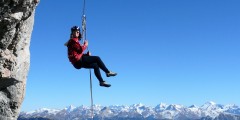
Since its very beginning in the 1980s, public discourse about climate change has been structured by metaphors. We had the greenhouse effect, the carbon footprint, the hockey stick, the tipping point, and we also had climategate; and to these metaphors we can now add the ‘climate cliff’ (which one can almost see as an upside …
The Threat of Fracking: Real or Constructed?
December 14, 2012
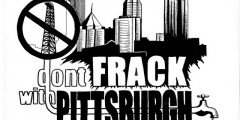
Guest post by Dr. Rusi Jaspal, Research Fellow on the ESRC’s Climate Change as a Complex Social Issue programme in the School of Sociology & Social Policy. (This post can be read in conjunction with Rusi’s 2014 article in The Conversation) Global energy consumption is likely to rise significantly over the next two decades with …

Science in Public 2013 – Call for Panel Proposals
UPDATE: You can see the full Call For Papers including details of all the proposed panels at http://scienceinpublic.org/conference/ 8th Annual Science in Public Conference, 22-23 July 2013 on ‘Critical Perspectives on Making Science Public’ Call for Panel Proposals The University of Nottingham is proud to host the 8th Annual Science in Public Conference, 22-23 July 2013. …

Inside climate science: the opening and closing of IPCC expertise
December 12, 2012
This is a guest post by the University of Nottingham’s Paul Matthews – outlining what he can (and can’t!) divulge about the IPCC’s peer review process. The Intergovernmental Panel on Climate Change (IPCC) is the scientific body established by the United Nations to provide assessments of current knowledge in this complex and controversial field of …

The end of journals? Open access, impact and the production of knowledge
December 6, 2012
Under direction from the government, there is a drive to make publicly funded research open access; that is, if you go to the website where the journal article resides, non-subscribers will not be met by a page asking you to part with $30+ for the privilege of reading. Research articles will be free to read….but …
Making concepts public: Experiments in ‘conceptual show and tell’
December 3, 2012
The ‘Making Science Public’ project subsumes nine subprojects led by people from a wide variety of disciplines, such as anthropology, geography, veterinary science, biosciences, sociology, science and technology studies and linguistics. During recent conversations and team meetings it has become clear that some concepts which have an obvious meaning for some members of our group, …
Making plants science: The role of herbaria and images in botany
November 23, 2012
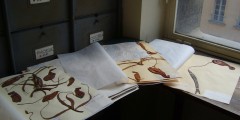
This is a one-off Guest Blog by Maura C. Flannery, Professor of Biology, St. John’s University, NY, reflecting on, what one may call, ‘making the private life of plants public’, or more precisely the use of herbaria, photography and art in botany, as well as issues of truth and trust. The blog is related to …
Big Data: Challenges and opportunities
November 20, 2012
With increasing frequency one can read announcements welcoming us to the age of Big Data (put the phrase “welcome to the age of big data” into google and you’ll get over 488,000 results). Reading about two recent events in particular sharpened my awareness of this new era, namely a big data event at the British …
 MSP bookmarks
- Twitter May 8, 2017
- Social innovations in Europe #RRI November 3, 2015
- Harvey Graff, the undisciplinarian September 20, 2015
- Replacing Pesticides With Genetics August 31, 2015
- Addressing hazardous chemicals in the circular economy August 25, 2015
Find, follow, join us


