

Rosetta and the rubber duck: How we got to know a comet
August 7, 2014
I can’t really let Rosetta pass by without a little blog post… This was brought home to me when Alasdair Taylor tweeted on 2:21 PM – 6 Aug 2014: “Sexiest, crazy bonkers, rubber duck, chaotic town, Disneyland, big roller coaster, scary ride: all terms used to describe #Rosetta”. This made me curious about how people …

Black sky research
August 2, 2014
A few days ago I chatted with an industry-based innovations manager who, in passing, mentioned the word ‘black sky research’. We didn’t get a chance to explore this concept further but the phrase stuck in my mind. Then Philip Moriarty tweeted a link to an article on the threat of the impact agenda to blue …

Climate fiction: The anticipation and exploration of plausible futures
July 27, 2014
A few days ago Paul Collins asked me whether an emerging fictional genre, namely climate fiction or cli-fi, could help engage people with climate change. I had to confess that I had come across this new genre but had not thought about it in depth. This type of ignorance and confusion has never prevented me …

Thinking with animals: The microbe
July 25, 2014
This is a GUEST POST by Richard Helliwell, a PhD student at the Institute for Science and Society, who participated in a workshop on Thinking with Animals at the University of Nottingham on 20th June 2014. What does it mean to think with animals, in particular to think with microbes, my ‘animal’ companion of thought? …

Evidence-based policy: data has its limits
July 16, 2014
This post was originally published on the blog of the Alliance for Useful Evidence, an open–access network of more than 1,800 individuals that champions the use of evidence in social policy and practice. “Aaarghhh! Politics and policy-making is so frustrating! We spend so much time conducting careful scientific analysis in all kinds of fields of enquiry. The results are published …

Publicness and Öffentlichkeit – some linguistic musings
July 13, 2014
Since Roman times, the word ‘public’ has been deeply embedded in the English language, from republic to publican to public convenience; but it still causes problems, as we have discovered several times on the pages of this blog. ‘Public’ has multiple meanings; it is a staple of academic inquiry; but it is not a word …

You say regulatory science, I say mandated science; let’s call the whole thing off?
July 2, 2014
One issue of contention after the Circling the Square conference was the apparent confounding of science with regulatory science. I finally took a bit of time to dig into the history and use of the concept of ‘regulatory science’ and a related concept, ‘mandated science’. I should stress that there are whole courses on ‘regulatory …

Science, sensationalism and the dangers of over-selling research
June 27, 2014
This is a GUEST POST by FREYA HARRISON. Freya works in Steve Diggle’s group in the Centre for Biomolecular Sciences at the University of Nottingham, where she researches the ecology and evolution of cooperation. She spends most of her time exploring how communication and cooperation help bacteria to cause chronic infections, but she is also …
Autism, sociality and human nature
June 26, 2014
This is a post by Gregory Hollin originally written for Somatosphere (where it made a bit of splash!) and reposted here with the permission of the author. There are, I believe, a few reasons to suppose that autism is a particularly fascinating area to be studying at the moment. What are those reasons? Firstly, prevalence …
Kandinsky, New Objectivity, and ripping apart the furniture
June 19, 2014
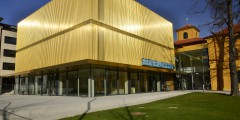
This is a post by GREGORY HOLLIN who helped organise the Circling the Square conference and these are his reflections on some of the online discussions that followed on blogs and in comments. Circles, Squares, and nonrepresentational forms in Munich Recently I visited Munich and, at the behest of a friend who knows far more …
 MSP bookmarks
- Twitter May 8, 2017
- Social innovations in Europe #RRI November 3, 2015
- Harvey Graff, the undisciplinarian September 20, 2015
- Replacing Pesticides With Genetics August 31, 2015
- Addressing hazardous chemicals in the circular economy August 25, 2015
Find, follow, join us


