

Humanitarian Landscapes: Deep Lessons from Afghanistan
January 27, 2015
IAPS was delighted to host Professor Antonio Donini, the former Director of the UN Office for the Coordination of Humanitarian Assistance (OCHA) in Afghanistan, as he delivered the annual Tomlinson lecture. Professor Donini detailed how for a long period of history, Afghanistan served as a laboratory for humanitarian action. He also detailed how humanitarian action …
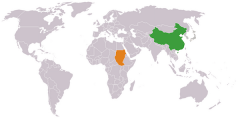
Many shades of responsibility: China’s Small Arms and Light Weapons Transfers to the Republic of Sudan since 2003
January 15, 2015
By Jade Hall, Winner of the 2014 Tomlinson MA Prize for the best dissertation on Asia. Small arms and light weapons (SALW) have increasingly become the weapon of choice in conflicts throughout the developing world, and are responsible for hundreds of thousands of deaths annually. Recent studies have shown that SALW imports increase the probability …
The State of the Taiwan politics field
December 9, 2014
Written by Dr Jon Sullivan, Contemporary Chinese Studies, University of Nottingham. As a western academic working on Taiwan, the health of Taiwan studies is something that has concerned me for several years. As a PhD student attending the European Association of Taiwan Studies conference in Madrid in 2009, I listened to the eminent American Taiwan …
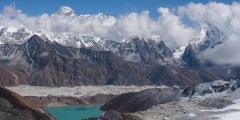
South Asia’s hydrological moment with China
November 10, 2014
Written by Uttam Kumar Sinha. The countries of South Asia face, with alarming regularity, the twin blights of drought and floods. The management of hydro resources is a critical challenge for South Asia, one that requires a different political outlook and a focus on water. This change of aspect clearly brings into attention the Himalayan and …

Typhoon Yolanda: One Year Later
November 7, 2014
By Pauline Eadie Nearly a year ago, on 8 November 2013 super-typhoon Yolanda hit the Visayan region of the Philippines. Winds reached up to 200 mph with a ‘storm surge’ of over 17 feet. The storm surge was actually the height of a tsunami and the damage was catastrophic. The latest available official figures show that 6,293 individuals …
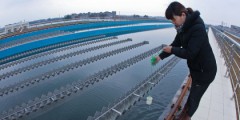
The many forms of water security in China
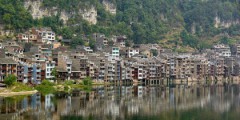
Written by Darrin Magee. By some measures, China is not a water-scarce country. Per capita water resources stood at just over 2,000 cubic meters in 2013 according to the National Bureau of Statistics, with overall water availability at nearly 2.8 trillion cubic meters. Yet these figures tell only part of the story. China’s seemingly sufficient water …
China’s transboundary waters
November 4, 2014
Written by Patricia Wouters. China shares more than 50 major international watercourses with its (mostly) downstream riparian neighbours — North Korea, Russia, Mongolia, Kazakhstan, Kyrgyzstan, Tajikistan,Bhutan, Myanmar, Laos, Nepal, Pakistan (Kashmir), Afghanistan, India and Vietnam. Less than 1% of Chinese water comes from outside its borders, but it contributes significantly to river basins flowing from …
Running Dry: Water, Agriculture and Climate Change in China
November 3, 2014
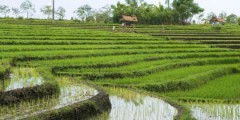
Written by Christine E. Boyle. Conflicting reports on the state of China’s agricultural water use situation range from statements that China’s water shortages threaten the future food security of the nation, to optimistic reports that China’s potential gains for water use efficiency spell out great opportunity for reaching more sustainable water-use rates, and stabilizing grain …

Who is at the helm of Japan, politicians or bureaucrats?
October 30, 2014
Japanese political culture and bureaucrats Yuichiro Shimizu, Visiting Professor at Harvard University, gave a talk to IAPS on the linkages between the bureaucracy and the political class in Japan, Japan adopted a parliamentary system not unlike the United Kingdom after being defeated in WWII. The majority of post-war prime ministers in Japan were formerly bureaucrats. …
China and the spectre of water wars in Southeast Asia
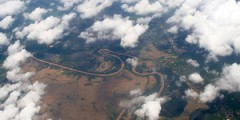
Written by Pichamon Yeophantong. In late 2013, controversy over China’s dams on the upper stretches of the Mekong River—otherwise known as the Lancang Jiang—flared up once again. Disbelief quickly spread among the communities of the Lower Mekong Basin when an acute peak in water levels during December resulted in massive flooding in parts of northern …


Recent Comments