
October 1, 2025, by bbztlg
“Too many cooks? Never.” Reflections on engaging with diverse stakeholders
Dr Bethany Jackson, a Nottingham Research Fellow in the School of Geography, reflects on the topic of interdisciplinarity and her journey in research.
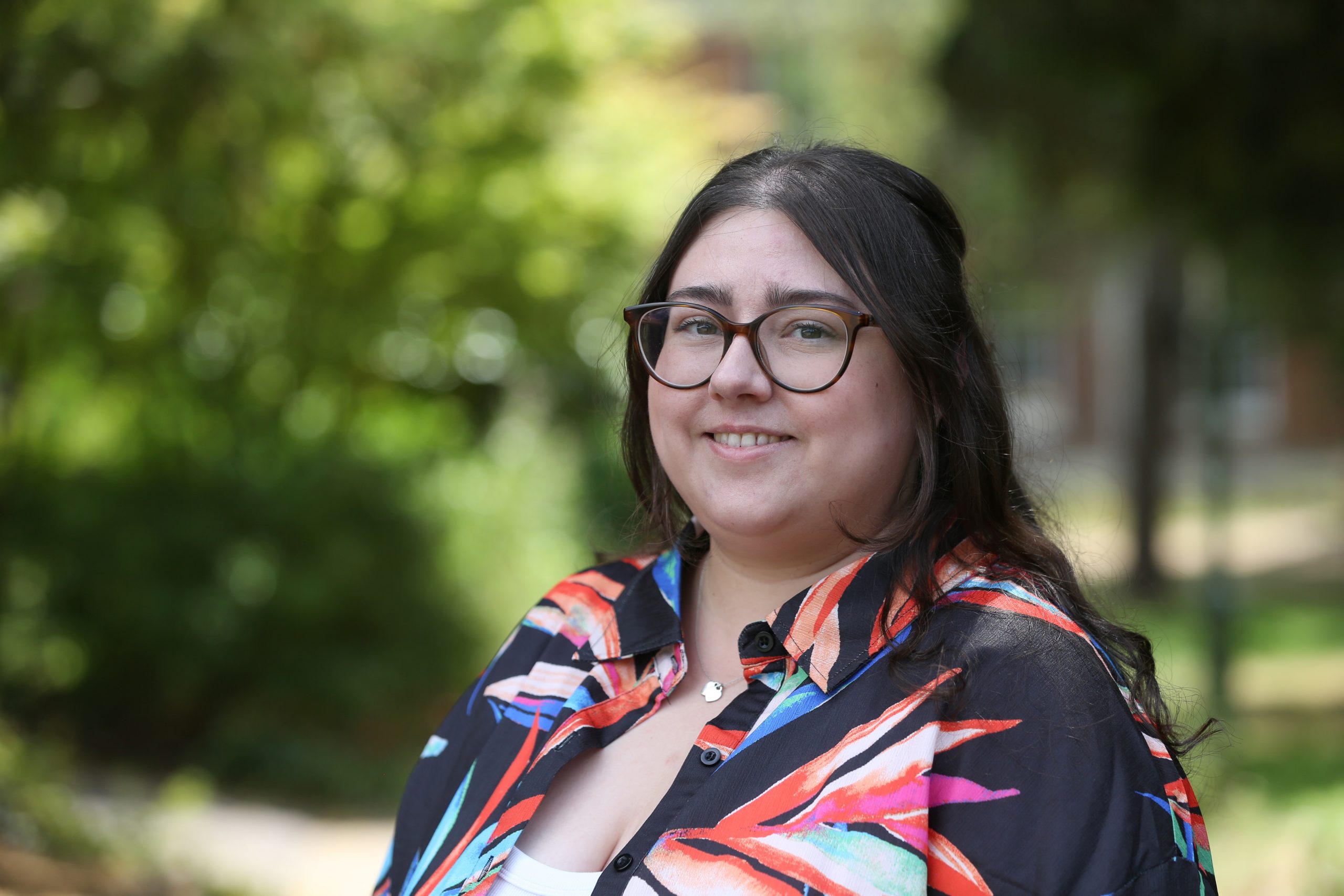
Dr Beth Jackson, Nottingham Research Fellow
I’ve never been one to make life easy for myself – this is best reflected in the way my research has evolved. Many people look at one specific challenge that may be complex, but it sits within a single research field.
Interdisciplinarity is supposed to have shattered these boundaries and yet the practicalities rarely reflect this across funding, policy and collaboration. I am lucky that I have been encouraged and had the opportunity to combine my interests on labour rights and the impact of climate change as a geographer where disciplinary boundaries aren’t rigid. There is however still one challenge that remains – how do you talk about and make inroads with two often disconnected research fields.
This is a struggle I have been grappling with since I completed by PhD and began my post-doctoral journey (shockingly five years ago). The labour space has been discussing the impacts of climate change for a while – after all the Just Transition movement originally arose from union action in the U.S. in the 1970s – and there has been a wealth of researchers (including myself) and civil society organizations that have been looking at the intersection of labour (often from the perspective of extreme forms of exploitation) and climate change. This has however not been as pertinent an issue in the environmental space.
The winds of change seemed to begin to stir in 2021 where the World Wildlife Fund (US branch) approached us to look at the intersection of labour and climate in the run up to the UNFCCC COP26 hosted in Glasgow. I organised and hosted an event with leading actors from both sides of the isle that I work across, with speakers from labour rights groups such as Solidarity Center, environmental organisations such as Earthworm Foundation, and global governance actors (e.g., UNDP). The aim was to get people sharing their work and producing a roadmap of recommendations that would help to provide a more collaborative landscape for shared opportunities and funding where labour and climate issues may arise in tandem. This had a positive outcome for a short time, and I was feeling good about the outcome and boost from engaging (online – there was still a pandemic happening after all) at COP26.
Then post-doc life continued and it was in 2023 when I got my next shot to really get my teeth into making people engage with one another again. This was leading a project funded by the Modern Slavery Policy and Evidence Centre looking at potential opportunities to intersect modern slavery and climate policy specifically within the UK. This arose as the EU have been pushing toward a combined approach within their due diligence frameworks. The study provided the opportunity to engage with policymakers across both the national and devolved administrations who work on the topics of modern slavery and climate change within their respective departments but may have never sort out collaborations before. This provided a unique opportunity with civil servants from all four governments to assist in the development of actionable recommendations around more cohesive legislative and policy pathways for labour and climate action. I’ve previously written about my experiences of engaging policymakers; but my personal highlight was hearing civil servants from the Scottish Government inviting one another to collaborative meetings without us having to facilitate!
After this positive outcome I was challenged by the excellent Survivor Research Advisory Board (SRAB, Rights Lab) on whether combined policy would minimise the support and effort needed to eradicate modern slavery – a legitimate concern and one that I continue to ponder. But this did open an interesting third aspect of collaboration on complex topics – lived experience priorities.
Working with the SRAB and a colleague from Health Sciences we decided to explore the links between labour and climate from a different perspective and in combination with an additional complex risk: health.  Over a series of several sessions and many activities (involving whiteboards, maps and post-its), we co-produced an accessible paper looking at three key areas to addressing health and labour in the context of climate change from a lived experience perspective. This was a departure from the other forms of interconnected collaboration I had previously engaged in, but I think represents a new pathway and approach to addressing challenging issues. There is always more to learn, and you can’t get everything right all the time, but this was my most fulfilling engagement work yet.
There are several lessons I have taken away from the research projects I mention above:
-
From the first project I learned the skills to be able to identify cross-cutting issues and share expertise.
-
From the second, I began to understand the complexity of policymaking and identified ways to facilitate conversations between departments.
-
Finally, in my third project I have begun to reflect on the different priorities from stakeholders and the need to develop more creative communication and inclusion of diverse voices in complex research.
My research has thus been on a journey – from engaging with interested organisations working in the field, to policymakers, to lived experience experts – there is I feel no right or wrong way to engage with stakeholders of all kinds. The key is to speak with and learn from as many people from as many aspects of your research topics as you can and reflect on how you can continue to do this across your research. It may mean your previous assumptions are challenged, it may make you question everything you’ve ever published on the topic – but it may be one of the most valuable things that you do.
No comments yet, fill out a comment to be the first

Leave a Reply