
October 31, 2025, by Rob Ounsworth
Building work begins on national MRI facility
Research update by Professor Tom Rodden
Work is under way on a landmark project that will place the University of Nottingham at the heart of world-leading brain imaging research.
An extension to University Park’s Sir Peter Mansfield Imaging Centre will house the UK’s most powerful MRI scanner – an 11.7 Tesla Ultra High Field system that will transform how researchers and clinicians understand the human brain and disease.
The new scanner, 1,000 times more powerful than the MRI systems pioneered by the late Sir Peter Mansfield, will enable unprecedented insights into conditions such as Alzheimer’s, Parkinson’s, Huntington’s, autism, and schizophrenia – continuing our legacy of innovation and impact in medical science.
Spin-outs powering innovation and regional growth
Earlier this month, the University of Nottingham proudly celebrated the pioneering individuals and teams transforming world-class research into ventures driving innovation, sustainability and economic growth across the Midlands and beyond.
Enterprise Excellence: A celebration of University of Nottingham spin-outs showcased the achievements of the university’s thriving spin-out portfolio – now close to 40 active companies delivering impact in diverse sectors. Our Vice-Chancellor, Professor Jane Norman, opening the event, noting that Nottingham research and its spin-outs are creating real-world benefits for society, the environment and the economy.
Removing barriers to venture capital
While UoN spin-outs have raised more than £100m in venture capital over the past five years, Professor Norman acknowledged the barriers to finance facing early-stage businesses, particularly in the Midlands. To address this, the university has invested £5m in equity finance into its portfolio over the last five years, partnered in Midlands Mindforge, a patient capital fund supporting regional spin-outs, and launched Forging Ahead, alongside 14 other universities, to accelerate commercialisation and strengthen the Midlands’ innovation ecosystem.
KEF results strengthen leadership in innovation and regional impact
The celebration came shortly after the publication of the latest Knowledge Exchange Framework (KEF5) results, in which the University of Nottingham once again demonstrated its leadership in innovation and regional engagement.
The KEF evaluates how universities contribute to society and the economy through collaboration with businesses, charities, public bodies, and local communities. Nottingham’s results confirm its position among the UK’s top research-intensive institutions and underscore its pivotal role in driving growth and innovation across the East Midlands.
New Partnerships Due Diligence Framework
The university has introduced a new Partnerships Due Diligence Framework to strengthen how risks in collaborations are assessed and managed.
The framework extends beyond international partnerships to include higher-risk UK-based organisations, particularly in sensitive sectors or where ethical, legal, or reputational concerns may arise. In such cases, partnerships will undergo enhanced checks and, where necessary, a plan will be developed to responsibly manage risks.
The Trusted Research team is available to support colleagues in applying it within their areas.
Midlands Ecosystem Platform
The Midlands Ecosystem Platform, just launched by Midlands Innovation, is a free, open-access gateway to the region’s £31bn innovation economy. For Nottingham and our regional partners, it’s a powerful tool to showcase the Midlands’ innovation ecosystem and drive growth. Founders can connect with investors and global markets, universities can highlight spin-out successes, and investors and policymakers can track performance, spot opportunities, and demonstrate impact.
Nottingham-led guidance on online research integrity recommended for national use
Guidance developed at the university on addressing non-genuine participation in online research has been recommended for national use by the UK Research Integrity Office (UKRIO).
Led by the School of Medicine’s Dr Blandine French and supported by colleagues across the university and UKRIO, the guidance tackles the growing problem of participants misrepresenting themselves or bots completing surveys – issues that threaten data quality, research outcomes, and researcher wellbeing.
The practical framework provides researchers with ethical, flexible steps for preparing, monitoring, and responding to risks during online data collection. It is now freely available as a citable academic resource and will support funding applications, ethics reviews, and wider engagement activities.
This recognition highlights the University’s leadership in advancing research integrity and its commitment to supporting researchers in navigating emerging challenges.
Royal Society audit confirms strong research governance
The university has achieved a “Substantial Assurance” rating following a Royal Society institutional audit. Covering £63.8m of live grants, the review confirmed that UoN’s systems, policies, and research integrity practices are robust and effective.
Auditors praised the professionalism and cooperation of staff throughout the process. My congratulations to all involved in this important work. Strong governance protects researchers and enhances our reputation with funders, helping secure future grants.
Research Governance drop-in sessions
The Research Governance team is meanwhile launching a pilot series of informal drop-in sessions to support researchers. Open to all staff and students, these sessions provide a chance to speak directly with the team about any aspect of research governance, including grant applications, study documents, amendments, and guidance on Health Research Authority, Research Ethics, or governance processes.
Sessions take place on B floor in the Medical School at QMC from 10 am–2 pm, with no booking required.
The Researcher Academy celebrates 30 years of supporting the researcher community
As the Researcher Academy celebrates its 30th anniversary, we can reflect on three decades of dedicated support for researchers at the university. Since 1994, the academy has been a trusted partner advocating for researchers, building strategic partnerships and empowering researchers across all disciplines, from postgraduate research students to senior research leaders, to reach their highest ambitions.
Book Launch: Chronicles from the Academic Frontier
To launch its 30th anniversary celebrations, the Researcher Academy is presenting Chronicles from the Academic Frontier – a compelling collection of stories is inspired by the research journeys and lived experiences of University of Nottingham researchers.
Staff and students are invited to the book launch on Monday 24 November to listen to live readings and pick up a signed copy of the book. The book will also be available to purchase on Amazon.
Help promote environmental sustainability accreditation across our labs
The university is ramping up efforts to support Laboratory Efficiency Assessment Framework (LEAF) accreditation – a national programme designed to improve the environmental sustainability of research labs without compromising scientific quality – and we’re asking staff to help spread the word and encourage participation.
Want to find out more?
Join an online information session led by the Technical Sustainability Working Group to hear more about LEAF, developing environmentally sustainable lab practices, how to achieve LEAF accreditation and the audit process on Wednesday 5 November from 2pm-3pm via Teams.
The session is open to all wet lab users: PGRs, postdocs, researchers, technical professionals, academics and research enablers. No need to book, join the webinar via this Teams link. Please remember to put the time and link in your calendar. The session will be recorded.
Get ready for Researchfish 2026
Researchfish is a vital online platform for researchers, including grant holders and PhD students, to showcase the outcomes and impact of their funded research.
The 2026 Researchfish submission period runs from Monday 2 February until 4pm on Thursday 12 March 2026. But a reminder that you can create, edit, and assign outcomes in Researchfish at any time. Keeping your records up to date throughout the year ensures you’re fully prepared when the submission window opens.
Policy Support Fund and Participatory Research Fund
Two funds, supporting researchers to engage with policymakers, and to enhance outcomes by involving communities and research users, are now open for applications.
With best wishes and thanks for your support

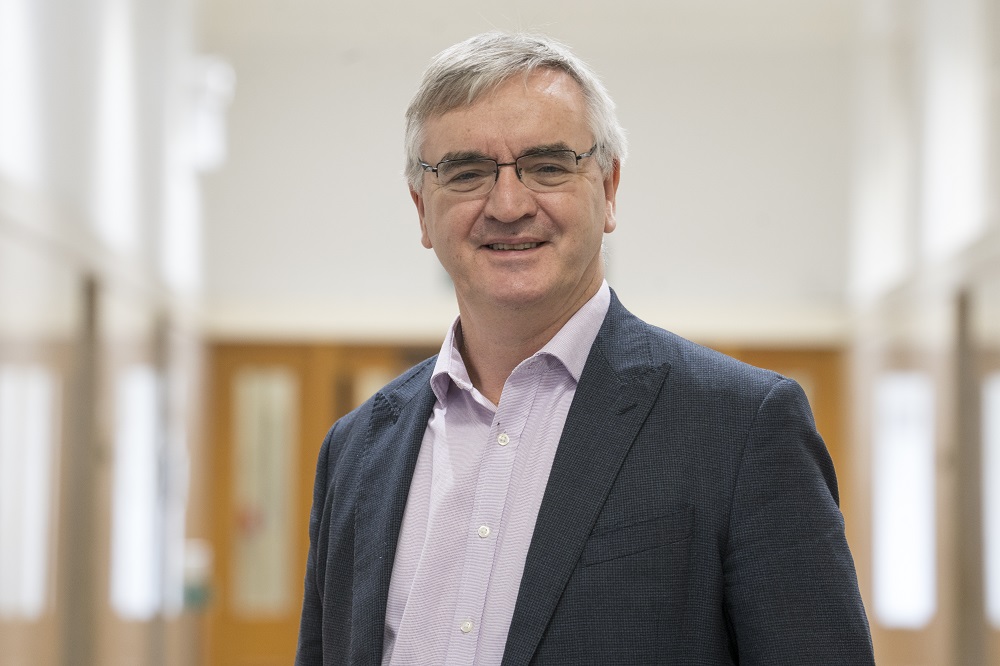
Professor Tom Rodden
Pro-Vice-Chancellor for Research and Knowledge Exchange
No comments yet, fill out a comment to be the first


Leave a Reply