
July 15, 2025, by Chloe
Hugh Stewart Hall: from Marlepitt to Manor House
Today, Hugh Stewart Hall is concealed in a wooded hollow, accessible by a winding path leading through an iron pergola covered in climbing plants and past the old tennis courts to the garden, where the story of this remarkable property began.
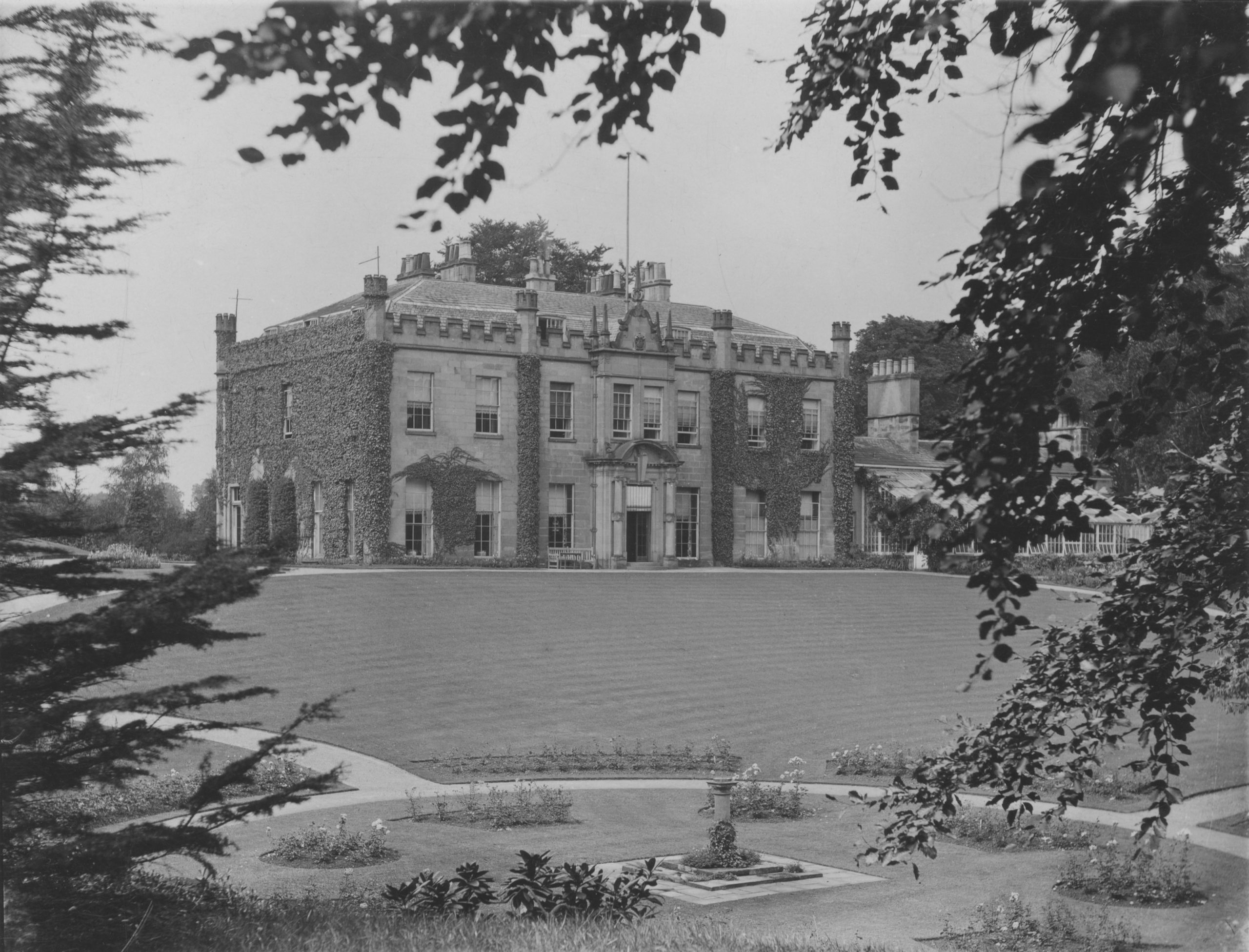
MS 854/4/6/2 Photograph of Lenton Hall, later Hugh Stewart Hall, and its garden; undated (pre-1930)
The east side of the garden was once a ‘marlepitt’, according to 16th century records. A ‘marlepitt’ refers to layers of mudstone and silt stone which could be extracted for use as a soil improver. The rest of the garden is relatively modern, and its most notable feature – the rock garden which lies at the southwest corner of the property – is believed to be Edwardian in origin, and was heavily restored by volunteers between 2010-2012.

MS 854/4/6/1 Photograph of Lenton Hall, later Hugh Stewart Hall; undated (pre-1930).
The original building, originally known as Lenton House, and later as Lenton Hall, was built at the turn of the 19th century by the architect William Stretton on behalf of John Wright, a Nottingham banker and the owner of the manufacturing firm The Butterley Company. The original design was pseudo-Gothic, featuring turrets and battlements. However, in 1905, the façade was remodelled under the supervision of its then-owner George Cresswell Bond, leaving a hybrid effect, featuring Jacobean, Baroque and Greek features as well as the dominant neo-Gothic. The west side of the house features several ‘dummy windows’, complete with lace-edged blinds and cords. As well as lending the building a pleasant 18th-century style symmetry, this feature was also a nifty cost-saving measure: they would have significantly reduced the tax levied on the property. This is because, between 1696 and 1851, ‘window tax’ was payable by the owners of properties with large numbers of windows.
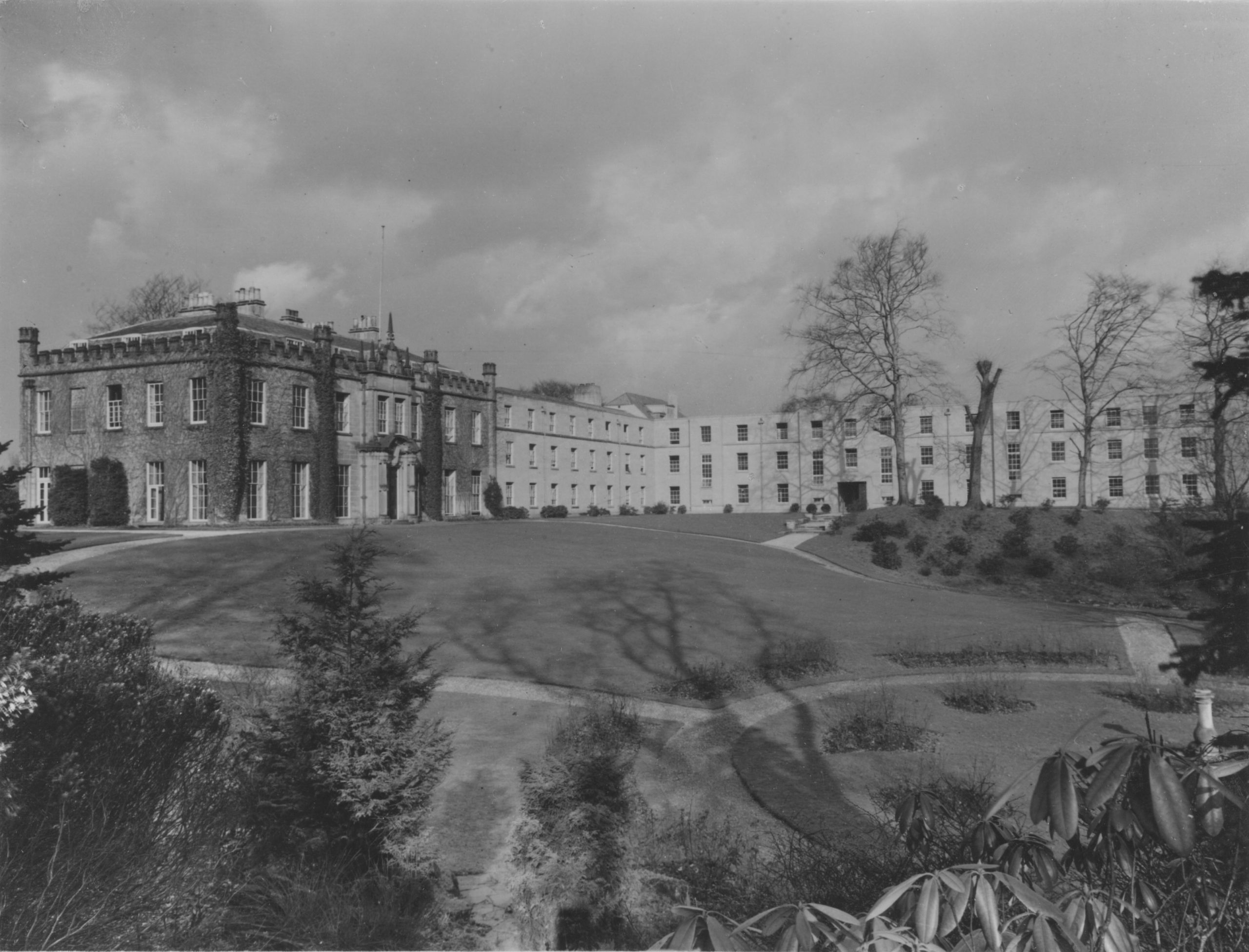
MS 854/4/6/5 Photograph of Hugh Stewart Hall with newly built extension; 1937
The exact date of construction is a matter of some controversy. The façade of the building bears the dates 1792-1905, with the latter referring to the later remodel. The earlier date remains a mystery, as Wright did not even purchase the land on which the house was constructed until 1798. Over the property’s long history, it had many different tenants and changed hands several times, including two separate periods of ownership by members of the Wright family, and an interlude during which it was owned by the Willoughbys of Wollaton Hall, culminating in its purchase by Jesse Boot in 1921.
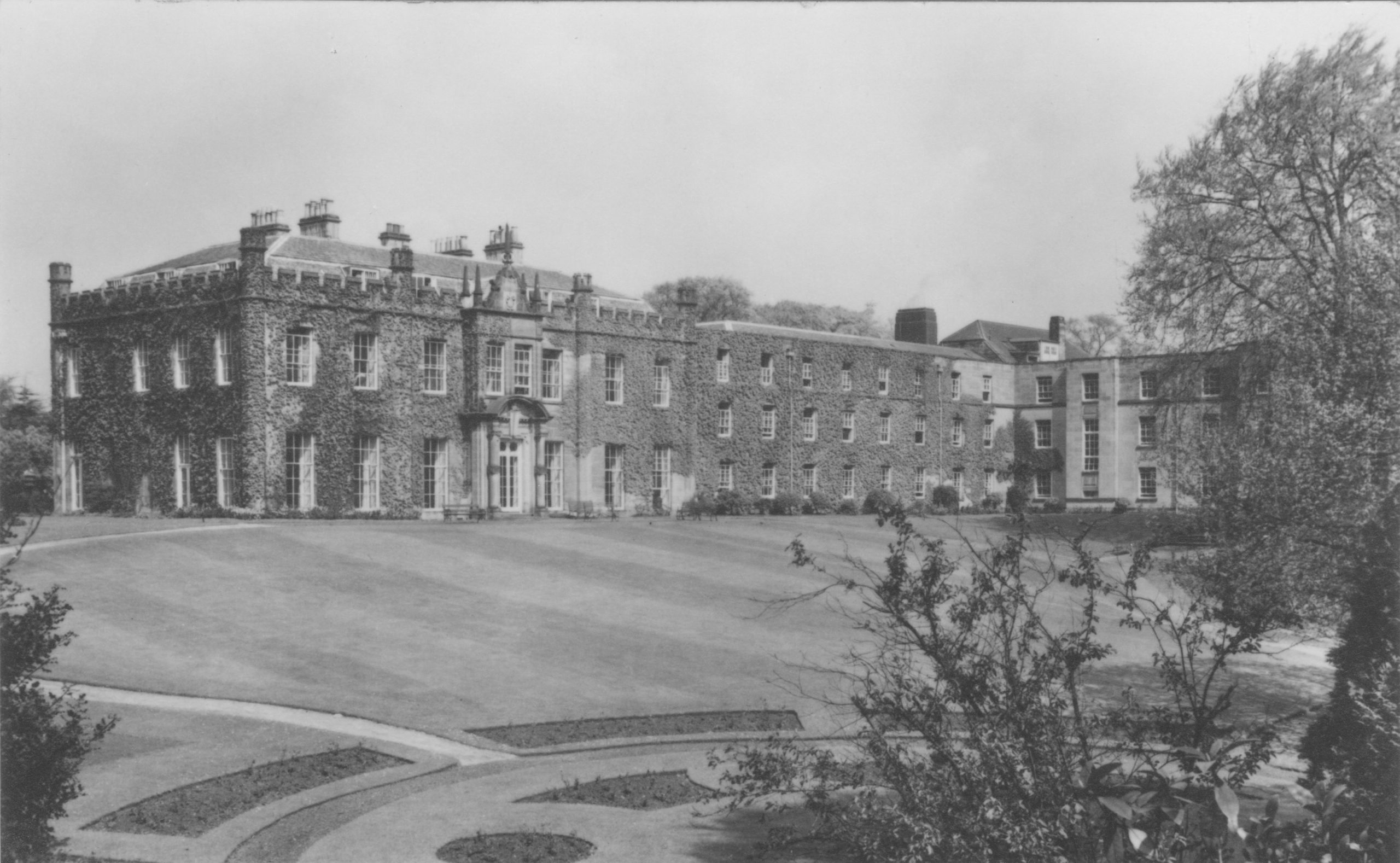
MS 854/4/6/4 Photograph of Hugh Stewart Hall; c.1960
Boot sold it on to University College Nottingham in 1930s, agreeing to pay for its conversion into the institution’s first men’s hall of residence. This included a new annexe which was then further extended between 1935 and 1937. The date of the images featured here is unknown, but it is likely that they come from directly before and after these renovations, marking the dramatic transformation of the building from tranquil country house to bustling university accommodation. In 1934, the hall was renamed Hugh Stewart Hall after the late Principal of the College. There was one final extension in 1969, after which the building remained untouched… at least until the current ongoing set of renovations!
If you’re interested in finding out more about the houses of University Park, why not come along on our free architecture walk, which will be taking place on Friday 12 September, 2pm – 3.30pm? To book your space, please email mss-library@nottingham.ac.uk.
No comments yet, fill out a comment to be the first


Leave a Reply