
October 28, 2025, by Sarah Colborne
Researching historic documents of climate, weather, and health
This is a guest blog by Jamie Wright, a second year Archaeology student undertaking a paid placement with Manuscripts and Special Collections at the University of Nottingham in the summer of 2025.
As a part of the Faculty of Arts, Summer Research Placement Project, I got to spend four weeks working in the Manuscripts and Special Collections looking at documents of climate, environment, weather, meteorology, and health and disease. Over the course of the placement, I handled photographs, pamphlets, charts and diagrams, letters, hand-written and typed notes, books, articles, newspapers, and many more different types of documents.
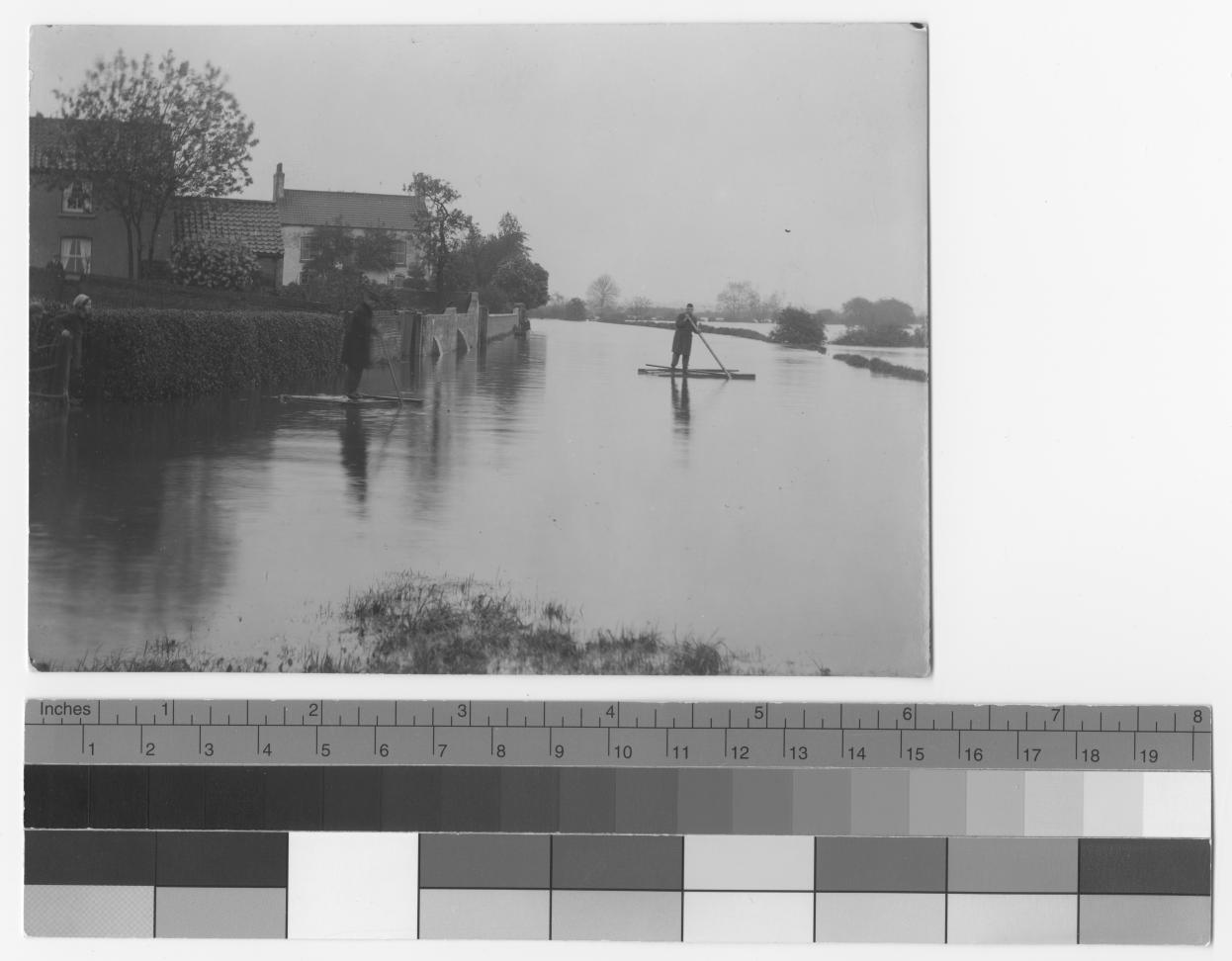
Photograph of floodwater from the River Trent, May 1932. RE/DOP/H42/112
When looking into local examples of weather and the environment, I was finding a lot of information on floods and droughts; given our close proximity to the River Trent. The main periods that were being mentioned in many different collections were from 1932, 1945, 1947, and 1959. In earlier years, there is more to mention of long periods of frost in 1891 and 1895, where information on monthly meteorology can be found from Colonel Henry Mellish’s documents.
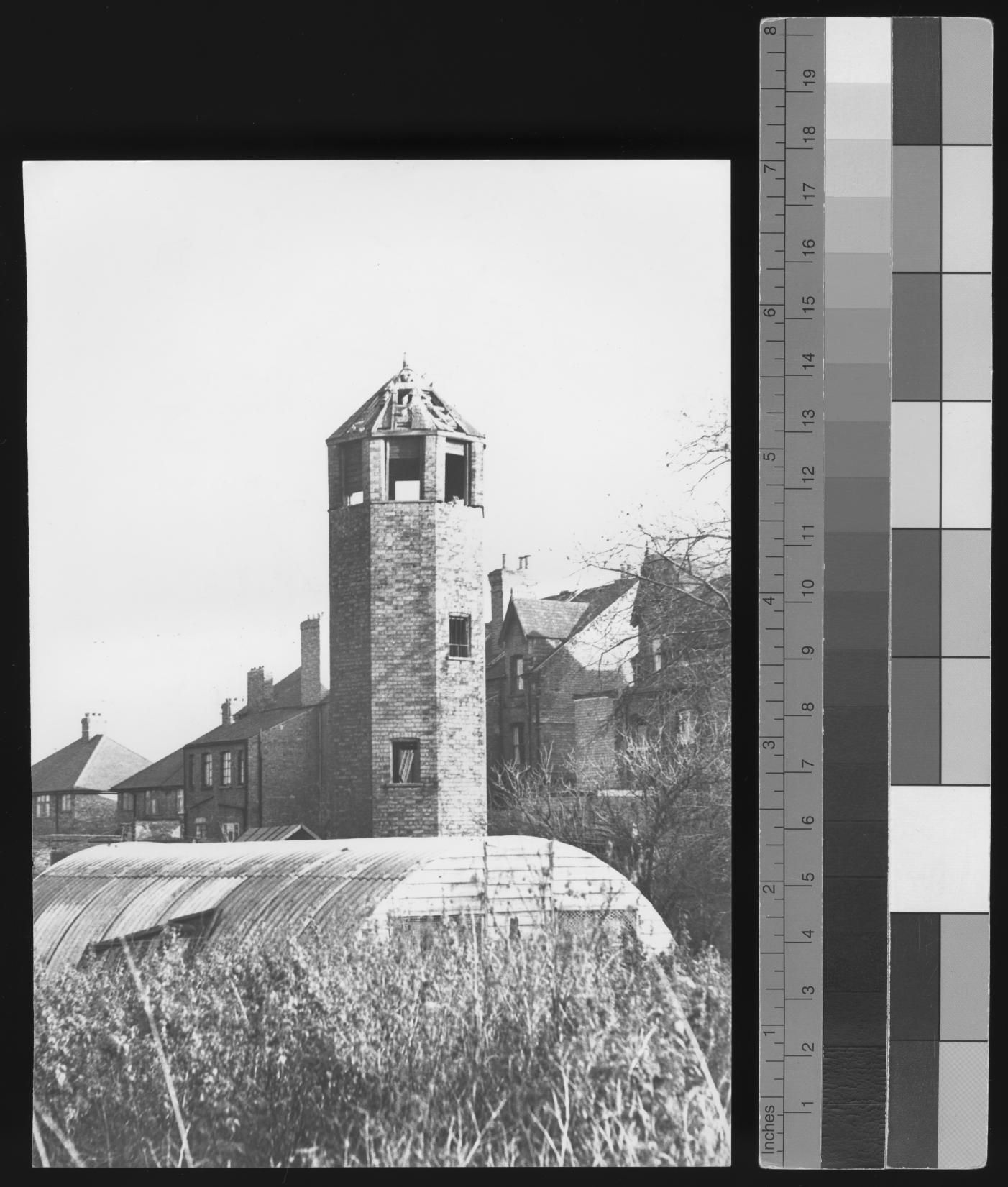
Lowe’s observatory at Beeston, 1968. Met/Lo/1/1
Repeated names of local meteorologists were often coming up in research and collections – mainly, my research led me to look at many documents from Harold Reeve Potter (1925-2000), Edward Joseph Lowe (1825-190), and Colonel Henry Mellish (1856-1927).
Lowe was a founder of the Royal Meteorological Society and worked with his father at their observatory at Highfield House. He wrote books on meteorology from a second observatory he founded at Broadgate House– named ‘Lawson observatory’ – and the special collections holds some of his work. These include ‘The climate of Nottingham during the year 1852; together with descriptions of the atmospheric phenomena which occurred in that year, as recorded in Highfield House observatory, near Nottingham’, that is a chronological collection of climate data from each day of 1852. And ‘The coming drought, or, The cycle of the seasons, with a chronological history of all the droughts and frosts as yet found recorded from A.D. 134 to the present time’, published in the 1880s that sort to better understand the climate of Earth and how droughts and frosts can be predicted.
H.R. Potter can be found in the collections as a prevalent figure for compiling reports on ‘The Great Flood’ in 1932 and the drought in 1959 in Nottingham and Derby, as well as many other extreme weather phenomena. Potter was a hydrologist with a particular interest in the history of rivers, his research into the River Trent’s hydrological and meteorological data helped to understand flooding patterns and potential methods of prevention in the 20th century.
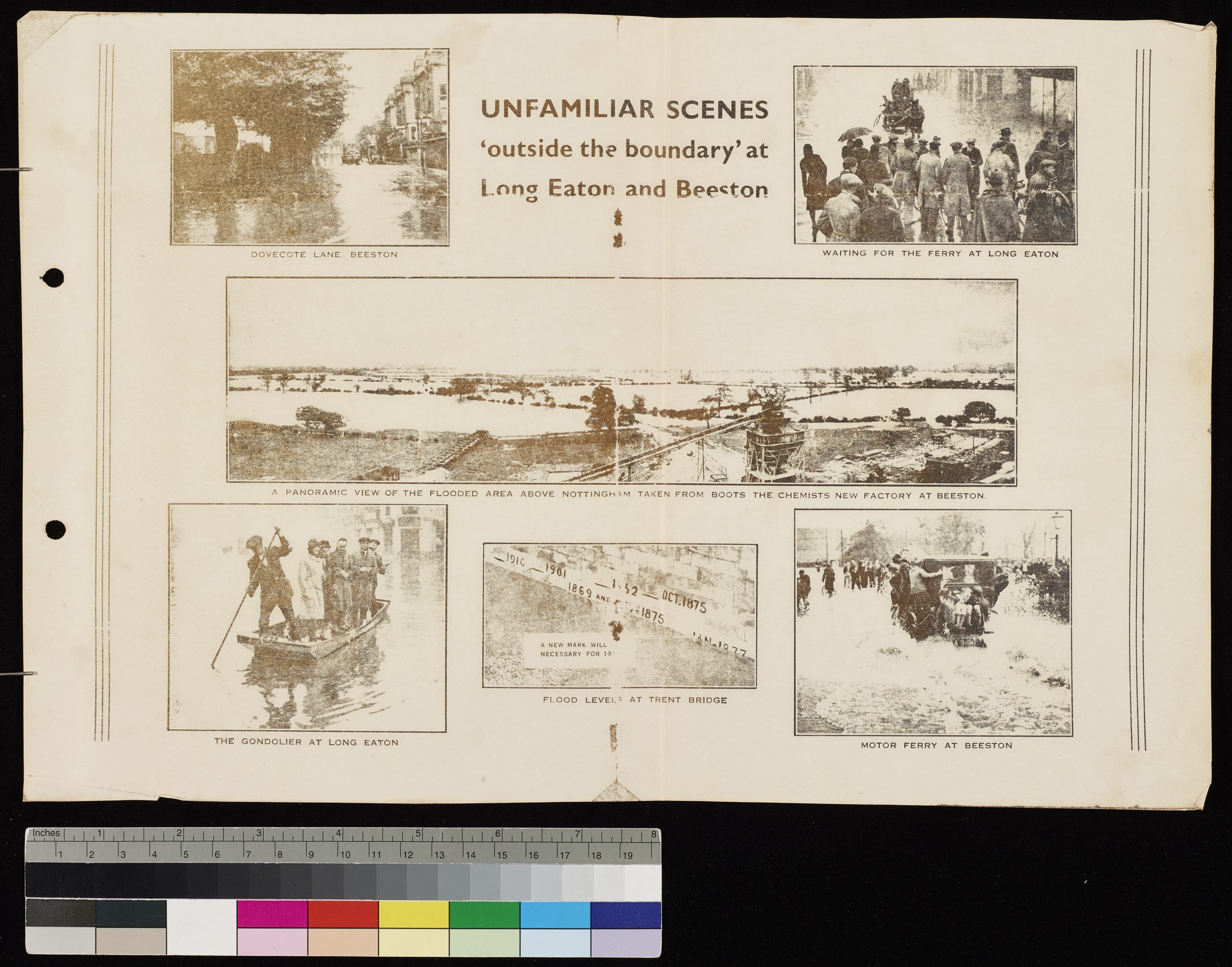
Page showing flooding in Long Eaton and Beeston, from ‘Souvenir of the Great Flood, May 1932: The greatest deluge for 40 years’. HRP/F/1/3/3
Henry Mellish lived in the Hodsock Priory estate, in which he inherited in 1864, and had a large interest in Meteorology. Collections of his ‘Monthly Meteorological Records’ from 1875-1926 are hand-written books of the climate of each month, and multiple of his published works on the weather and meteorological registers from Hodsock Priory can also be found in the special collections, such as ‘A meteorological register, kept at Mansfield Woodhouse, in Nottinghamshire: from the commencement of the year 1785, to the end of the year 1794’ and ‘Rainfall of Nottinghamshire, 1861-90’.
Research on the relationship between climate and health has been performed extensively, and we have an understanding of how certain environmental factors may negatively affect a person’s health. Examples of this research can be found in the collections, especially around cholera in England. Publications from William Farr (1852) on the ‘Report on the mortality of cholera in England’, looked at how colder temperatures often connected to higher rates of death from cholera in London. Correlations were also found between the poor living conditions of lower call workers, and how air and water pollution could cause disease outbreaks. The pandemic of cholera in 1849 prompted many sanitary reforms for workers in London, in an attempt to improve living and working conditions and decrease mortality.
Pollution and the climate crisis have also introduced political discussions on the environment into my research at MSC. These include pamphlets from the Labour Party and Communist Party in Ken Coates’ records. Coates was a politician, writer, and member of the European Parliament for the East Midlands who had strong interests in the environment. In some of his published articles in the collection, Coates encourages that people should be able to speak out about the issues around climate, and societies should be encouraged to listen to this feedback and correct its methods before damage is irreversible. He ends that “In sum, industrial, social and political democracy is the precondition for the preservation of the environment”. He has written about themes such as how modern technologies provide a great negative impact on the environment, but also on the health of workers in long hours, bad conditions, and the pollution of their air and water. As well as how the environment is spoken about and treated in capitalism, Marxism, and socialism.
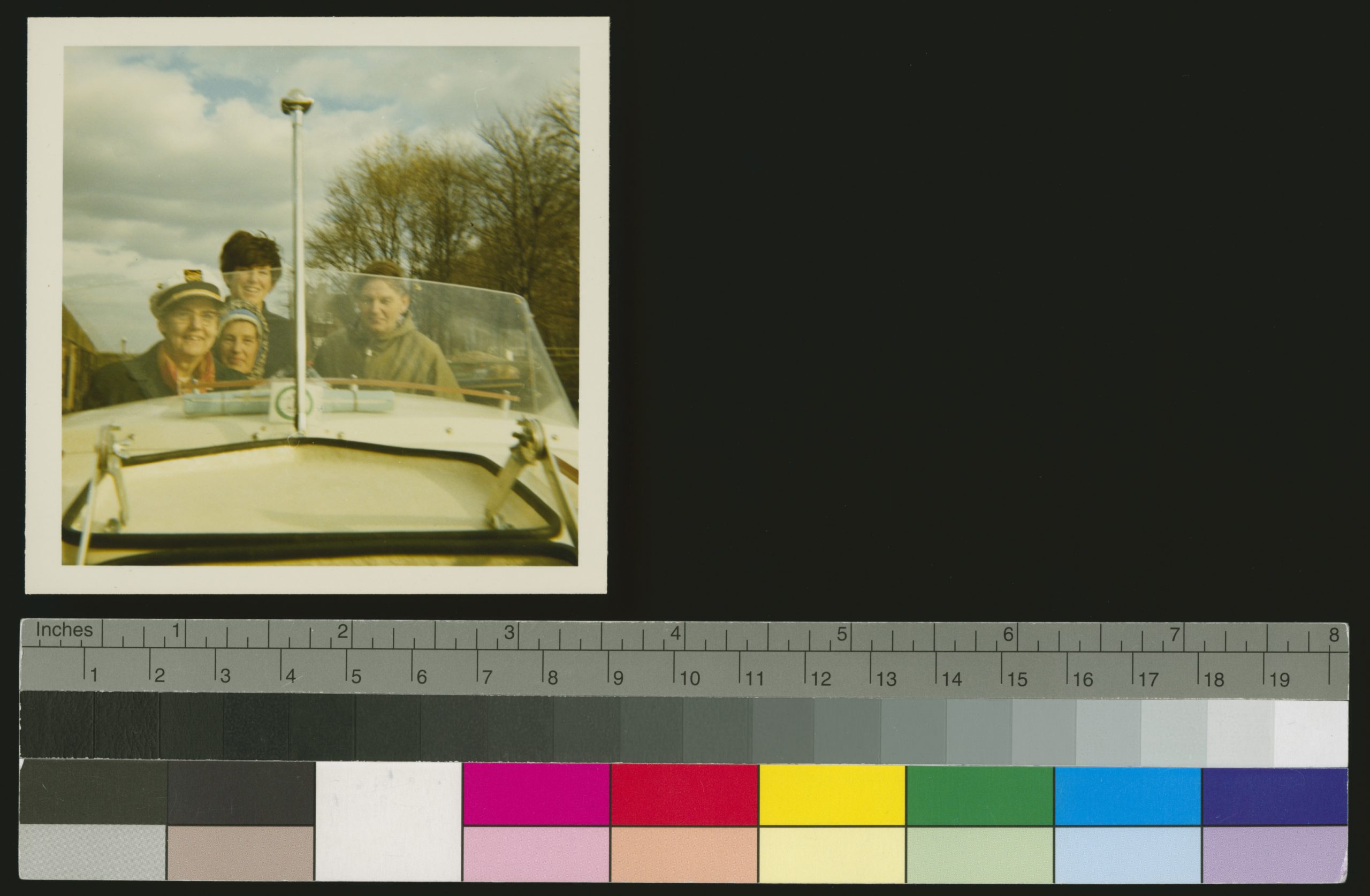
Connie Ford sailing her boat, c.1960s-1970s
Alongside this, political pamphlets can be found in the collections of Connie Ford, local veterinarian, poet, and political activist. Alongside some of her creative writing that would often feature motifs of nature, Ford also attended many political talks on the subject, of which she took her own handwritten notes and collected printed documents.
I applied for this placement in order to gain some experience in what it would be like to work as a researcher and due to my interest in the environment and climate crisis. I was, however, somewhat unfamiliar with meteorology as a study, and was surprised to find just how many documents there were of previous dedicated researchers, who would document levels of rain, snow, sunshine, and other weather patterns for years. I most enjoyed being able view old photographs and read old newspapers from different extreme weathers; I find that it can help bring the past alive and connect more recent Trent floods with how they were experienced almost 100 years ago. It was also engaging to read around the political aspects of the climate crisis, looking at different viewpoints and reflecting on how modern lifestyles impact our planet. I am thankful for everyone at MSC for being so supportive and welcoming, and I greatly enjoyed all my time as a part of the Summer Research Placement Project.
Further research
The idea for the placement was prompted by carbon literacy training organised by the National Archives. The sources Jamie mentions can be explored via the Manuscripts Online Catalogue and in the Manuscripts Reading Room and are summarised in a research guide. These sources include a collection of meteorological records collected by, amongst others, J.H. Lowe, Colonel Henry Mellish, and the University’s Geography Department. Further information about weather archives can be accessed via the online exhibition Weather Extremes, curated by Professor Georgina Endfield and Dr Lucy Veale of the School of Geography and the Tempest Database of extreme weather events in the UK, compiled from all of the data collected through archival, library and oral history research for the Weather Extremes research project.
No comments yet, fill out a comment to be the first


Leave a Reply