
September 2, 2025, by Kathryn Summerwill
Forest Town: the town in the countryside
The coal mining boom of the late 19th and early 20th centuries had a lasting impact on the countryside. In 1920 over a million people were employed in coal mines across the United Kingdom, and many of them lived in purpose-built colliery villages like Forest Town.
Housing in colliery villages
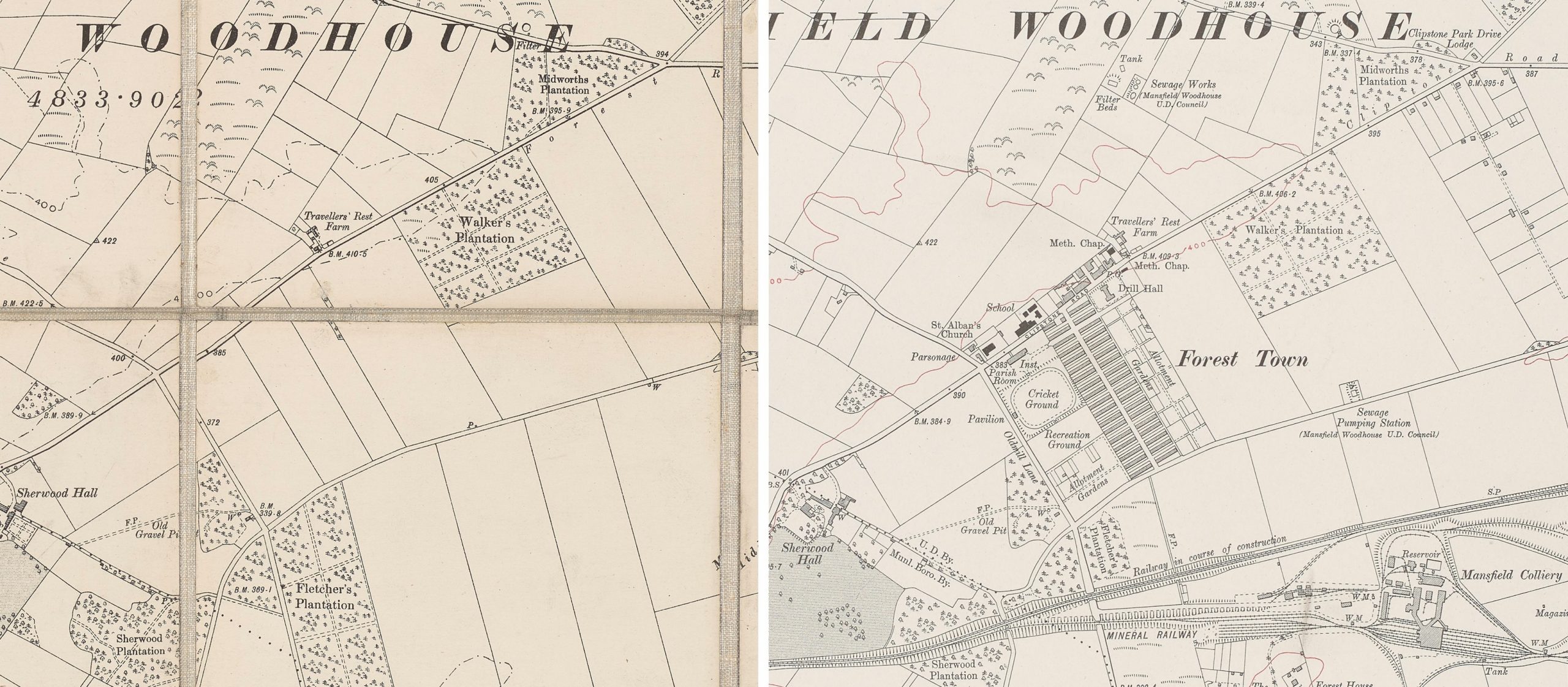
Details from maps showing the area of Forest Town before (1900) and after (1920) development: Ordnance Survey 6 inch, Nottinghamshire sheet XXIII.SW (University of Nottingham, Manvers Collection, Ma M 2/1 and Ma 2 P 146/5)
Like many other aristocratic families, the Dukes of Portland of Welbeck Abbey owned land under which coal was located. They made money from granting mineral leases to colliery companies and involved themselves in decisions on where and how to build housing for the workers in the new pits.
Forest Town, near Mansfield Woodhouse in Nottinghamshire, was developed on formerly rural land in the 1910s and 1920s for the employees of the coal mine at Clipstone. It was specified in a draft conveyance of 25.5 acres of land (Pl E12/9/4/5/10) from the Duke of Portland and his trustees to the Bolsover Colliery Company in 1915 that only one public house should be allowed. Its profits were to be reinvested for the benefit of the new village. Additionally, there should be no more than 15 houses built per acre. In comparison, the current Mansfield District Local Plan suggests 30-35 dwellings per hectare (12-13 per acre).
The colliery housing in Forest Town dating from the 1920s was built in terraces, rather like in cities.
Leisure in colliery villages
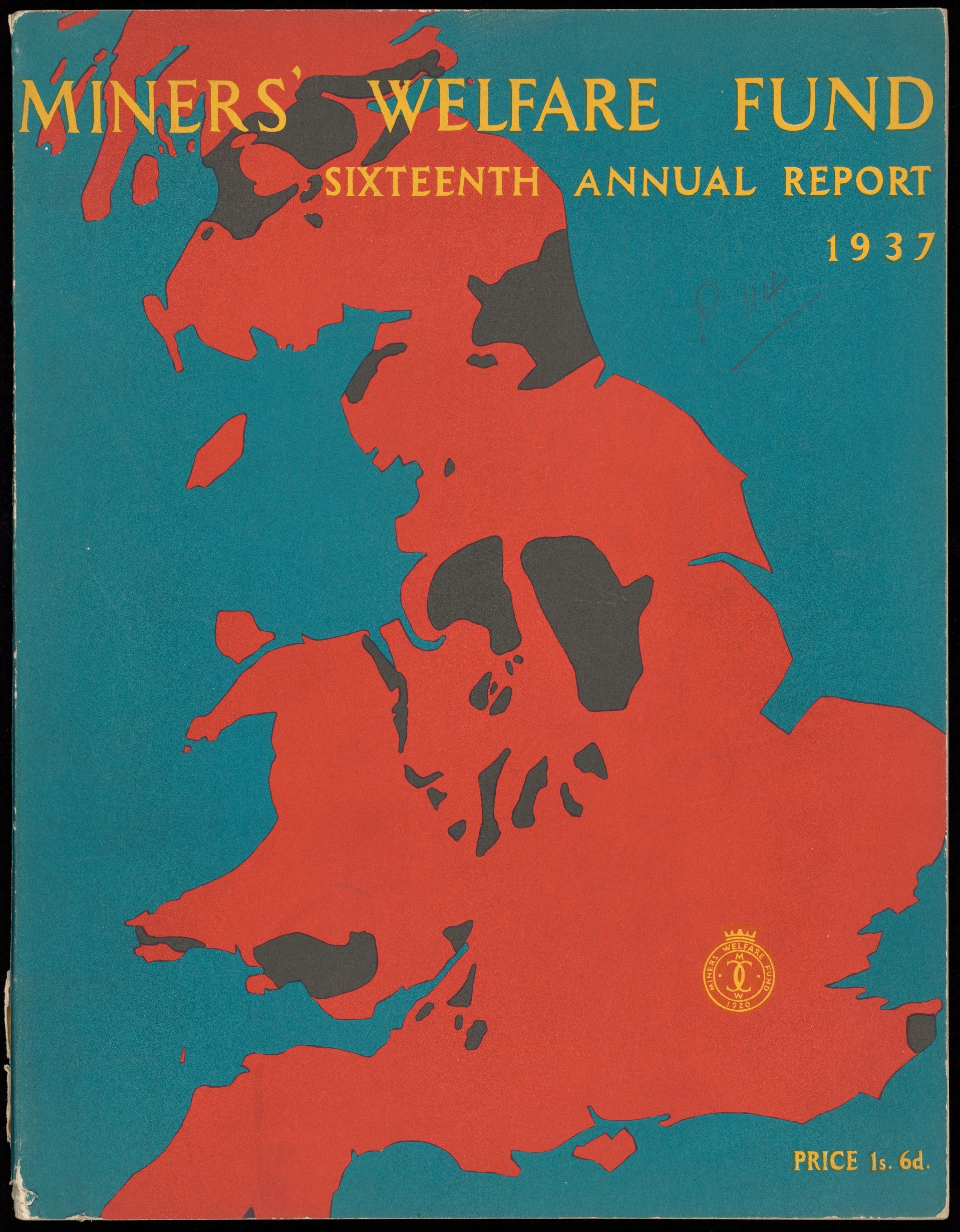
Front cover of the Miners’ Welfare Fund 16th Annual Report, 1937 (University of Nottingham, MS 1012/4/16)
Living side-by-side, and with most residents employed by the pit, the communities in mining villages were close-knit. Socialising with colleagues was encouraged by the government’s Board of Trade, which appointed the Miners’ Welfare Committee in 1921 under the provisions of the previous year’s Mining Industry Act. The Committee distributed funds to improve ‘the social well-being, recreation and conditions of living of workers in or about coalmines’. Records of the Miners’ Welfare Commission from 1921 to the 1950s (MS 1012) include reports shedding light on the facilities built and the activities provided for miners and their families.
By the 1950s, residents of Forest Town were able to make use of a football field, pavilion, children’s playground, a licensed Miners’ Welfare Institute, a Drill Hall, and cricket, cycling, tennis and bowling facilities.
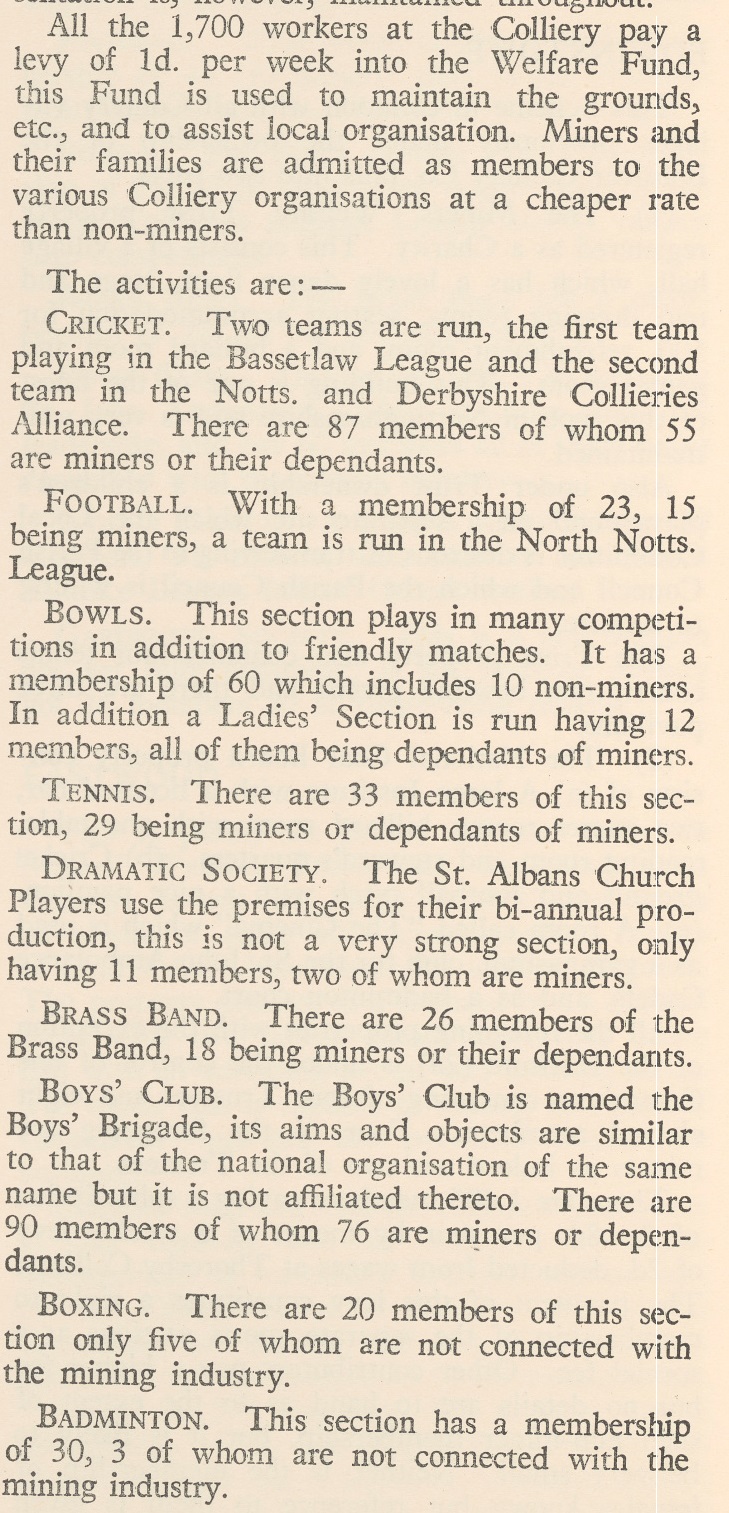
Description of some of the clubs and activities in Forest Town organised by the Miners’ Welfare Committee and the National Coal Board in 1951, from ‘A Survey of Miners’ Welfare Facilities and Activities in the Nottinghamshire Coalfield’ (University of Nottingham, MS 1012/7/4)
Similar premises were evident in other mining communities across Nottinghamshire and Derbyshire. The East Kirkby Institute served the Summit Colliery in Kirkby-in-Ashfield. The colliery closed in 1969, but The Summit Centre is still a charitable trust owned and run by East Kirkby Miners’ Welfare.
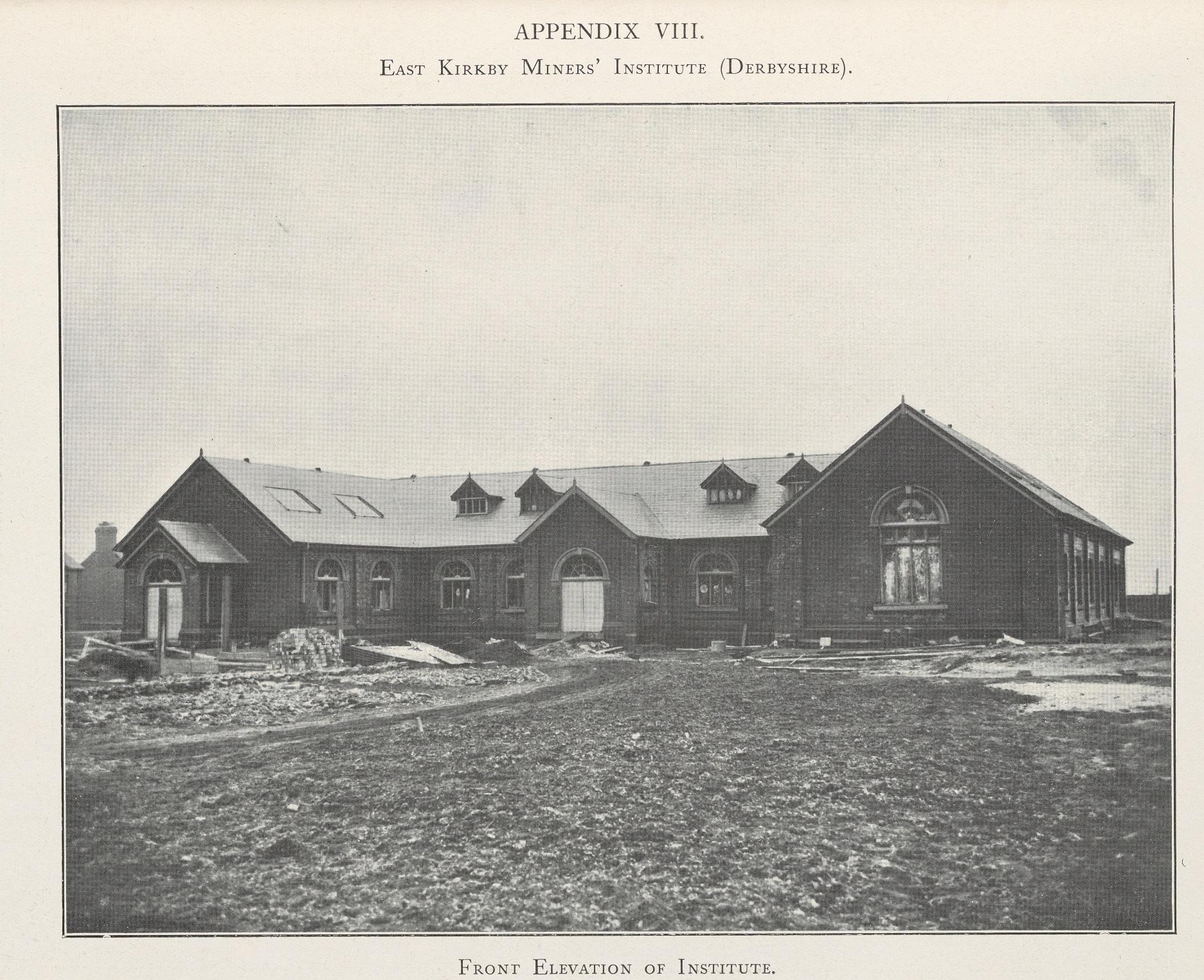
Photograph of the East Kirkby Miners’ Institute, 1922, from the First Annual Report of the Miners’ Welfare Fund (University of Nottingham, MS 1012/4/1)
Various illustrated histories and community memories of Forest Town are held in the East Midlands Collection, many gathered by local historian Pauline Marples. They can be consulted in the Manuscripts and Special Collections Reading Room, and some can be borrowed by University library members.
Forest Town is featured in the Country lives exhibition at the Weston Gallery, which is open until Sunday 21 September.
Interested in exploring the collections?
To book an appointment in our reading room to view items from any of our collections, please contact mss-library@nottingham.ac.uk
No comments yet, fill out a comment to be the first


Leave a Reply