
July 29, 2025, by Mark Bentley
Discovering the digital
Exploring ways to enhance access to our collections
At Manuscripts and Special Collections, we are always striving to increase opportunities for our community to access our collections digitally as well as physically. We also continually seek to make our platforms easier to use to increase discovery of our collections.
Late last year we embarked on a project to review our existing digital access platforms to evaluate how well they were meeting our user community needs and identify ways to enhance our digital offering.
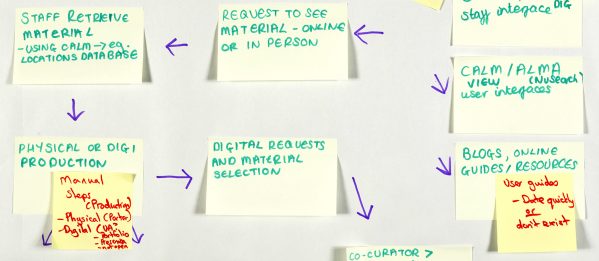
Post-it notes from a digital access workshop discussion
Work completed so far
So far for the project we have surveyed our existing digital access tools and user groups, including our own staff. This consultation has taken the form of workshops, interviews and usability testing of some of our digital platforms.
Listed below are different types of digital content and the ways in which our users can currently discover and interact digitally with our collections:
- Digital Galleries
- Manuscripts Online Catalogue
- Exhibition Spaces
- Dedicated computer to view born digital material in our reading room
- Virtual Reading Room
- Interactive resources

Some of our digital resources
What we have found
The process has been very revealing. It has confirmed many of the thoughts we had internally about some of the possible opportunities to enhance the digital experience we offer. We can see that whilst our users value our information and extensive digital resources very highly (75% of respondents to the PSQG survey 2024 rated the quality of our online resources as “very good”), usability testing has demonstrated navigation challenges across our multiple digital access platforms.
There would be benefits to streamlining the way in which users interact with our digital content. We have also identified a need to provide clearer and more easily digestible information about how archives work, how to access digital (and physical!) content, and provide clear instructions on how digital content can be used, including permission to reuse.
Another aspect that we are now exploring is technologies that allow users to interact with our digital content in more innovative ways for research purposes. This includes experimenting with 3D and other imaging techniques such as reflectance transformation imaging and photogrammetry, and incorporating tools that allow for more sophisticated analysis and comparison of our digital images online. This allows our collections to be explored in new ways. We are also interested in mapping our collections geographically.
This means that we need to provide access not just to static images, but also complex digital objects. Tools such as artificial intelligence could provide opportunities to expand and develop the ability to draw together data from our different digital collections in ways that traditional archive catalogues and search tools may not have been able to provide.
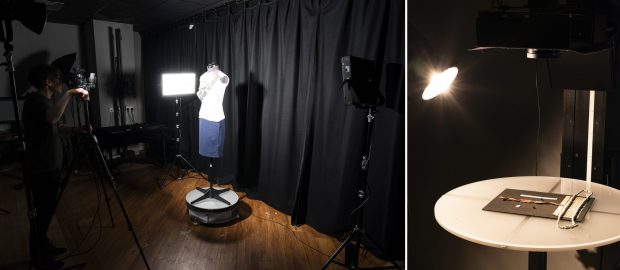
Photographing a 3D mannequin and Reflectance Transformation Imaging of a 13th Century seal
Still to come
Having gathered a lot of very useful information during the course of this consultation process, we are now moving on to improving the tools we have, investigating various technologies that can support innovative research access, and will also continue to focus on ensuring the information we provide alongside our digital content helps users most effectively understand what it is and how it can be used.
In the meantime you can access our digital content via our the Manuscripts and Special Collections website, Digital Gallery or by visiting us in our reading room. You can also contact us at mss-library@nottingham.ac.uk to find out more.
No comments yet, fill out a comment to be the first


Leave a Reply