
Deaf Awareness Week 2021: Coming through it together
May 7, 2021
This last year has been tough in so many ways. Already dealing with communication barriers, people with deafness and hearing loss have faced added difficulties brought by the pandemic. As we (hopefully) look forward to the situation improving, the theme for this year’s Deaf Awareness Week (3-9 May) ‘coming through it together’ is very …

Help us understand how and why people use – or don’t use – their hearing aids
April 13, 2021
Do you have hearing aids? Do you use them regularly, sometimes or not at all? We need your help! Please complete our questionnaires to help us understand how we can make it easier for people to use their hearing aids. Contact paige.church@nottingham.ac.uk to take part. Read below to find out more! Thank you. Approximately 12 …
Hearing aids versus a cochlear implant – which is better for adults with severe hearing loss?
March 29, 2021
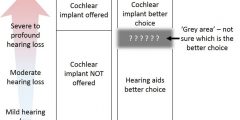
Well, for adults who have hearing loss equal to or greater than 80dB, NICE (National Institute for Health and Care Excellence) advise that a cochlear implant is better. But what about adults who just miss out on this cut-off point? People with hearing loss between 70dB and 80dB? Well, the evidence isn’t clear – there exists a ‘grey …

Help us find out if COVID-19 affects hearing, tinnitus and balance – please take part!
The COVID-19 pandemic is ever evolving and research communities around the world have contributed a monumental effort into understanding more about this new virus, and the symptoms and side effects associated. It has been suggested that COVID-19 may possibly have an impact on hearing, cause or worsen tinnitus (ringing or other sounds in the ears) …
World Hearing Day 2021
March 3, 2021
Countries around the world have looked to the World Health Organisation (WHO) for information and guidance on how to combat the COVID-19 pandemic. But did you know that the WHO has long been working to reduce hearing difficulties worldwide too? World Hearing Day is a campaign held each year by the Office of Prevention of …
International Cochlear Implant Day
February 25, 2021
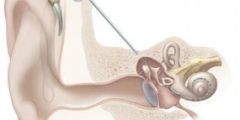
Cochlear implants can help even the most profoundly deafened people to hear. They capture sounds and digitise them – turn them into electrical signals – before relaying these signals directly to the inner ear, or the cochlea. Here, the signals excite the hearing nerve which then sends impulses to the brain so the person can …

Taking steps forward in discovering drugs to treat tinnitus
February 5, 2021
We know that various treatments can help people manage their tinnitus but everyone would like there to be a cure for tinnitus. We are not there yet, but work is being done to find one. For Tinnitus Week, we would like to revisit the work we did to test a new drug. Back in 2014/15, …
Research to improve tinnitus – are we getting there?
February 3, 2021
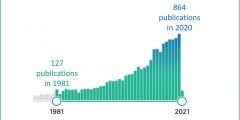
When I started working in the tinnitus field, there were very few colleagues (and most of those soon became competitors!) Discovering that so little was known about tinnitus amongst professionals feels to me a bit like finding a music band, or a writer, who no-one else has yet found and realising this will define …
Tinnitus Week 2021
February 1, 2021
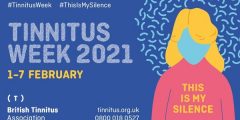
What is tinnitus? Tinnitus is sound that is perceived internally and does not come from any outside source. It could be sensed as ringing, buzzing, hissing, whooshing, whining or sometimes even musical noises. Tinnitus Week 1st to 7th February 2021 This year, Tinnitus Week runs from 1st to 7th February. The theme for 2021 …

Can I have an MRI scan when I use cochlear implants?
August 19, 2020
We want to improve the experience for people who use cochlear implants and need to have an MRI scan. Please help us by completing our survey. Physicist, Dr Rebecca Dewey, explains more. If you use a cochlear implant, please consider completing this 15-minute survey: https://nottingham.onlinesurveys.ac.uk/ci_comfort. It’s entirely anonymous, and you can complete …

