

Research Priority Areas: big ideas for global challenges
May 3, 2018
Guest blog by Dr Richard Masterman, Associate Pro-Vice-Chancellor for Research Strategy and Performance. At the latest RPA Information Day, I was delighted to welcome academics from the University’s Research Priority Areas, together with colleagues from Research and Innovation, and members of Professional Services who support research and knowledge exchange. The afternoon session of the event, …
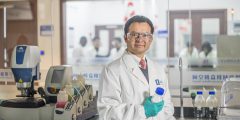
Reducing pollution: Professor Tao Wu
April 23, 2018
Professor Tao Wu, Dean of the Faculty of Science and Engineering and Professor of Chemical Engineering at our Ningbo Campus China talks about his research into tackling air pollution to ensure a sustainable future. How would you explain your research? China has historically been a heavy user of coal, which generates a lot of air …

Improving patient care through data: Professor Richard Hubbard
April 18, 2018
Professor Richard Hubbard, Li Dak Sum Chair Professor in Economics at our Ningbo China Campus talks about how he is working to transform patient care in China and beyond. Can you explain your research? My work uses data accumulated as part of routine clinical care to improve the way patients are looked after. We’re taking …

Tackling ‘hidden hunger’: GeoNutrition team’s unprecedented Malawi survey
April 16, 2018
Teams of technical staff, agricultural scientists, PhD and Masters students from Malawi taking part in an international research project with the University of Nottingham were told by their government: “Your work will help improve the health of our nation.” The researchers and technicians were today (16 April) travelling from bases across Malawi to begin sampling …
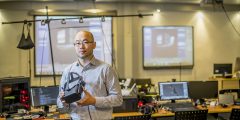
Virtual Reality (VR) and beyond: Professor Eugene Ch’ng
April 9, 2018
Professor Eugene Ch’ng, Director of NVIDIA Joint’Lab on Mixed Reality at our Ningbo China Campus, talks about his research into Virtual Reality and how in the future, the past will be as accessible as the present. Can you explain your research? I’m an expert in Virtual Reality (VR) and associated technologies such as Augmented Reality …

RIS — find out more at roadshows across the University
March 16, 2018
Roadshows showcasing the Research Information System (RIS) take place from Tuesday 20 March, giving colleagues the opportunity to find out about the new functionality that will be coming online over the next few months. RIS provides a structured way of managing the preparation, approval and submission of grant applications, as well as providing a user-friendly …
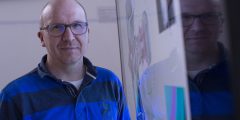
Blue skies and fair winds: Professor Hervé Morvan
March 7, 2018
Professor Hervé Morvan, Director of the Institute for Aerospace Technology (IAT), is leaving the University of Nottingham to join one of the IAT’s longstanding industrial partners, Rolls-Royce, as Technology Strategist within the Rolls-Royce extended CTO Office*. Here, Hervé reflects on highlights of his five years leading the Institute and on his time with the Gas …
2017: a landmark year in research at our University
December 18, 2017
Guest blog from Professor Dame Jessica Corner, Pro-Vice-Chancellor for Research and Knowledge Exchange. In 2017, we committed to the most significant planned investment in our research and our people in the University’s history. As the year draws to a close, we can reflect on the milestones delivered by our Research Vision that underlines our commitment …

University of Nottingham professors shortlisted for prestigious Newton Prize
October 20, 2017
Two University of Nottingham professors have been shortlisted for the 2017 Newton Prize, an annual £1 million fund awarded for the best research or innovation that supports the economic development and social welfare of developing countries. Professor Michele Clarke and Professor Malcolm Bennett are in with the chance of winning up to £200,000 from the …

International Open Access Week: five reasons to share after publication
It’s the 10th International Open Access Week on 23-29 October 2017 and this year’s theme is an invitation to answer the question of what tangible benefits can be achieved by making scholarly outputs openly available. “Open in order to…” is intended as a prompt to go beyond talking about openness and focus instead on what …


