
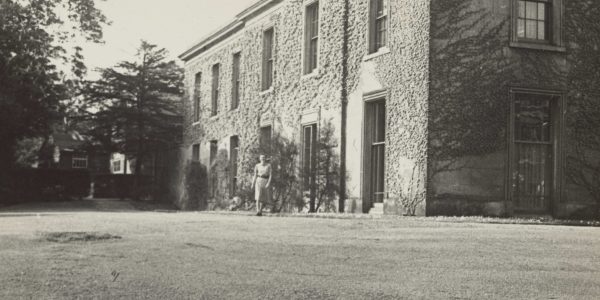
Botanists and Businessmen: meet the residents of Highfield House
August 21, 2025
Although it is today part of the university campus, when Highfield House was built at the end of the 18th century it would have been surrounded by pasture, and home to little more than a herd of cattle. Although the area would soon become well known as the site of luxurious homes for the wealthy businessmen …
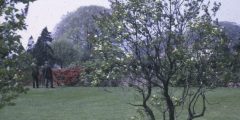
Croquet Lawns and Coach Houses: Echoes of Lenton Mount
August 7, 2025
Today known as The Hemsley, the building originally called Lenton Mount is named for its original owner: William Sidney Hemsley. Hemsley was a prosperous lace manufacturer in Nottingham who purchased the plot of land on which his house was built from the Lenton Hall estate in 1904. The property was designed by Nottingham architect William …
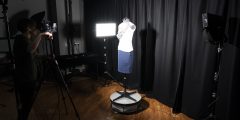
Discovering the digital
July 29, 2025
Exploring ways to enhance access to our collections At Manuscripts and Special Collections, we are always striving to increase opportunities for our community to access our collections digitally as well as physically. We also continually seek to make our platforms easier to use to increase discovery of our collections. Late last year we embarked on …
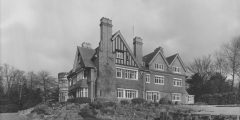
Beyond the Sunken Garden: The Many Lives of Lenton Hurst
July 22, 2025
Lenton Hurst is best known for its peaceful formal gardens, but there’s much more to this late Victorian delight: in its long life it has been a home, a college, a student hall of residence and an office, and many of its original features still survive… The land where Lenton Hurst stands today was purchased …

Hugh Stewart Hall: from Marlepitt to Manor House
July 15, 2025
Today, Hugh Stewart Hall is concealed in a wooded hollow, accessible by a winding path leading through an iron pergola covered in climbing plants and past the old tennis courts to the garden, where the story of this remarkable property began. The east side of the garden was once a ‘marlepitt’, according to 16th century …

Thoresby’s Lady Rozelle: the Nottinghamshire landowner who loved the open ocean
July 8, 2025
Lady Rozelle Raynes, born Frederica Rozelle Ridgway Pierrepont, had a long life (1925-2015) of chance, tragedy, adventure and happiness. Her parents were Gervas Evelyn Pierrepont and Marie-Louise Roosevelt Butterfield. They were privileged but not titled. Gervas fought with distinction in the First World War and then became a London County Councillor. Marie-Louise’s father had inherited …

The Beginnings of University Park
May 22, 2025
Did you know that University Park was originally intended to be a ‘model village’ rather than a university? Prominent industrialist Sir Jesse Boot purchased the Highfields estate in 1919, with the initial idea of transforming it into an attractive self-contained suburb to house Boots employees. However, around the same time, he had been engaging in …
Through the Lens: A Victorian Travel Album
March 19, 2025
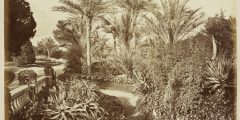
Following on from our previous blog, which unravelled the mystery surrounding a collection of 19th century slides depicting buildings and landscapes in India, this week we’re exploring another collection of Victorian photographs, following in the footsteps of Carrie S. North as she travels around France, Monaco, Algeria and Italy in 1891… Unfortunately, very little is …
Stunning slides saved from skip
March 13, 2025
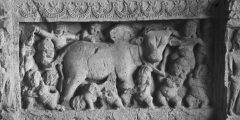
Here at Manuscripts and Special Collections, we hold many visually striking items, but an intriguing set of over 300 glass slides showing views of India – which depict monuments, landscapes and people – stand out even against this tough competition. The photographs date to approximately the 1860s and 1870s, but unfortunately, we can’t be certain …
Temples, tombs and troglodytes: the mythical origins of Nottingham’s caves
January 16, 2025
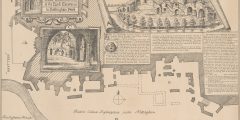
Upon encountering Nottingham’s caves, it was clear to many early antiquarians that these mysterious and little-understood structures must have deep roots, stretching back millennia into the distant past. An early proponent of this theory was the Elizabethan travel writer William Camden (1551-1623), who claimed in his landmark survey, ‘Britannia’, that the caves had been …
Find, follow, join us


