

Posts by Chloe
Stunning slides saved from skip
March 13, 2025
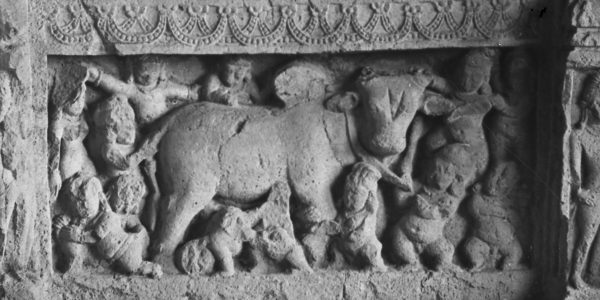
Here at Manuscripts and Special Collections, we hold many visually striking items, but an intriguing set of over 300 glass slides showing views of India – which depict monuments, landscapes and people – stand out even against this tough competition. The photographs date to approximately the 1860s and 1870s, but unfortunately, we can’t be certain …
Nottingham old and new
February 21, 2025
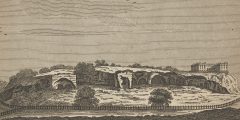
Charles Deering’s ‘Nottinghamia vetus et nova’, which translates from the Latin to ‘Nottingham old and new’, is widely considered to be one of the earliest histories of the town. First published in 1751, the book is a key source for the early study of Nottingham’s caves. Deering was born in Germany and spent his adult …
New book shines light on seventeenth-century collections
February 20, 2025
Manuscripts and Special Collections was excited to host the launch of a new book, ‘Change and Continuity in Seventeenth-century Nottinghamshire’ by Dr Peter Seddon, last week. Attendees had the chance to hear Dr Seddon discuss his work and to purchase a copy, but in a unique twist, they also had the opportunity to view some …
Into the Labyrinth
February 6, 2025
The story of the rediscovery and exploration of Nottingham’s caves has often been driven not only by determined study, but also by simple curiosity and even happenstance. This was certainly the case in 1837, when, in the course of the construction of a row of houses along Mansfield Road, the entrance to a mysterious labyrinth …
The Lions’ Den: Entertainment in Nottingham’s caves
January 31, 2025
Visitors to Nottingham’s caves are often disappointed to learn that most of them were used to store goods such as ale, wine and hay; or else as wells or kilns. True, they have been a vital part of the fabric of the town for at least a millennium, but these quotidian purposes don’t exactly live …
Temples, tombs and troglodytes: the mythical origins of Nottingham’s caves
January 16, 2025
Upon encountering Nottingham’s caves, it was clear to many early antiquarians that these mysterious and little-understood structures must have deep roots, stretching back millennia into the distant past. An early proponent of this theory was the Elizabethan travel writer William Camden (1551-1623), who claimed in his landmark survey, ‘Britannia’, that the caves had been …
Unearthing the Secrets of Vesuvius
December 17, 2024
It might nearly be Christmas, but today’s blog marks a holiday of a different kind as we continue to follow Dr Edward Wrench on his European tour in 1876. Last time we saw Dr Wrench, he had emerged from the Catacombs of the Capuchins at Rome, and, having satisfied his more superstitious impulses by drinking …
Skeletons and Superstitions
November 29, 2024
I don’t know about you, but the wintry weather has me yearning for warmer climes – and I’m not the only one! Last time we met Dr Edward Wrench in the midst of his European tour in February 1876, he was looking out over the Colosseum, but in today’s instalment he’s heading underground in search of …
Rambling around rock holes
November 26, 2024
William Parsons was a solicitor who lived between around 1809 and 1881, and who, between his legal work, his participation in the political and civic life of Nottingham and his often-rambunctious social life, was witness to major transformations to the fabric of the city due to increasing urbanisation and enclosure – a change to which …
Decoding Images in Early Modern Print
November 8, 2024
This is guest blog by Tom Nixon-Roworth, who recently undertook a three-month WRoCAH-funded Research and Employability Project (REP) on the Parish Library Collections, in which he reflects on his experience working at Manuscripts and Special Collections. It may come as no surprise to learn that as soon as the project was confirmed I was eagerly …
Find, follow, join us


