
August 28, 2025, by lzzre
What if this scrap of plastic holds the key to a new economy?
Emma Etim, School of Geography
Click here to read the full story: https://www.sciencedirect.com/science/article/pii/S240584402416094X
On a Tuesday evening in Lagos, the sun sags low behind snarled traffic, horns scream in a chaotic chorus of frustration, and the air hums with the promise of rain. Amid this chaos, Rita steps out of her rickety bus and watches a young man flick a soda wrapper to the dusty curb, although a bin stands inches away. In that instant, trash ceases to be refuse and becomes a question: what if this scrap of plastic holds the key to a new economy?
For Rita and her peers – Nigeria’s municipal solid waste entrepreneurs, awareness is the unseen scaffold that transforms litter into livelihoods. They speak of public education as infrastructure in its own right: a network of conversations, radio dramas, and town hall gatherings that reposition waste from burden to bounty.
They teach families to recognise the hidden value in reused bottles, organics, and sachets, inviting them into freemium-to-premium models where free doorstep collection and hands-on training eventually evolve into subscription services. This gentle progression overcomes psychological barriers, builds trust, and proves that sustainability and profit need not be mutually exclusive.
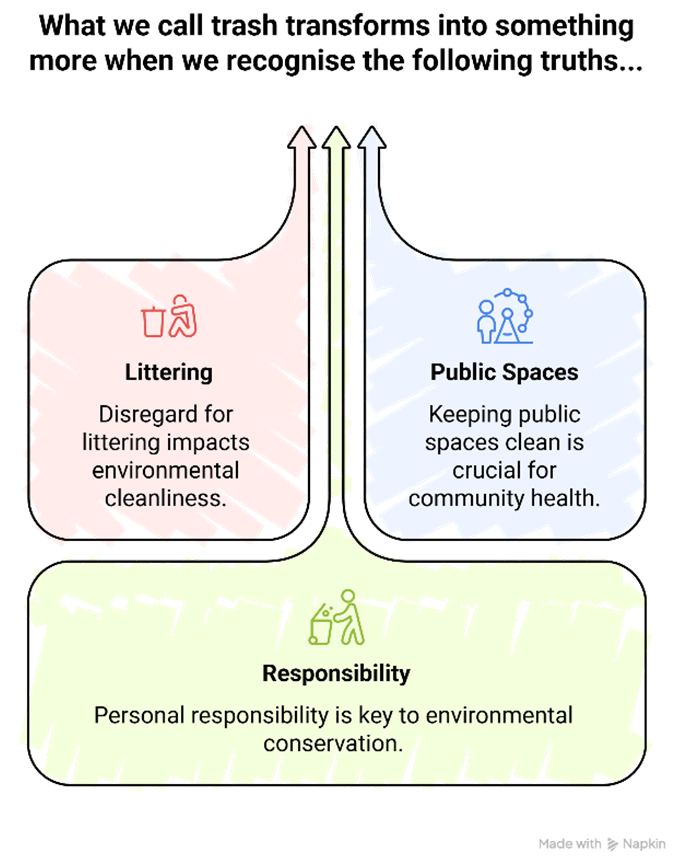
Also, while walking the winding lanes of Abia State during a two-month radio drama series sponsored by the Coca-Cola Foundation, I heard calls surge from listeners eager to join Rita’s recycling network. Each ring was a vote of confidence, a signal that stories pitched in Pidgin and local dialects can carry ideas across socio-economic divides. Yet awareness alone cannot fill gaps in sorting infrastructure or surmount the throw-away culture and religious teaching that insists “what happens is God’s will.” Entrepreneurs confront these beliefs with culturally attuned outreach, partnering with religious leaders whose words can steer congregations toward shared responsibility for the streets they walk and the water they drink.
Moving up to Northern Nigeria, on the edge of Kano’s sprawling markets, I sat with a group of waste operators mapping out a circular economy pilot project. They spoke of turning sachet waste into construction blocks and organics into biogas, a vision of closed loops in which nothing is truly discarded. Their sketches, scrawled on scrap cardboard, hinted at a future where waste-to-energy plants hum at the city’s periphery, powered by community participation and robust public–private partnerships. In this emerging ecosystem, regulators impose fines for illegal dumping, while entrepreneurs provide cleanup crews and equipment, fostering awareness in action.
Yet, as the sun set on that day when trash truly became treasure, several questions lingered: How can awareness campaigns be fine-tuned to address regional beliefs in fate without alienating faith communities? What metrics will capture the slow turn of households from indifference to active segregation? In a landscape where smartphones are both commonplace and costly, which digital platforms will sustain engagement beyond the novelty phase? How might universities codify waste management training to seed the next generation of eco-entrepreneurs? What role do gender and informal networks play in shaping the benefits of the burgeoning circular economy? Crucially, can these awareness-driven systems withstand the shocks of future public health crises that alter waste streams overnight?
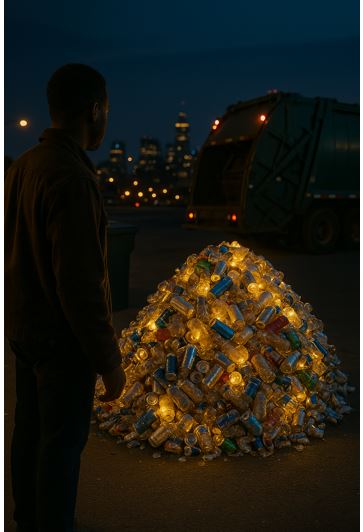
The day when trash becomes treasure hinges on more than bins and trucks; it depends on a collective shift in how communities see themselves and their discarded matter. As the night deepens and the city lights flicker on, that vision remains an invitation to explore, question, and build an infrastructure of awareness that will turn our waste into the world’s next wonder.
Follow me on this page and my handles as my research attempts to answer some of these questions.
Read more about this story in my recent publication.
Etim, E., 2024. Leveraging public awareness and behavioural change for entrepreneurial waste management. Heliyon, 10(21). https://www.sciencedirect.com/science/article/pii/S240584402416094X
No comments yet, fill out a comment to be the first


Leave a Reply